CULLMAN, Ala. – New businesses may appear to arrive quickly once construction begins, but Cullman Economic Development Agency Retail & Workforce Development Manager Susan Eller said retail projects often result from years of preparation, relationship building and coordination.
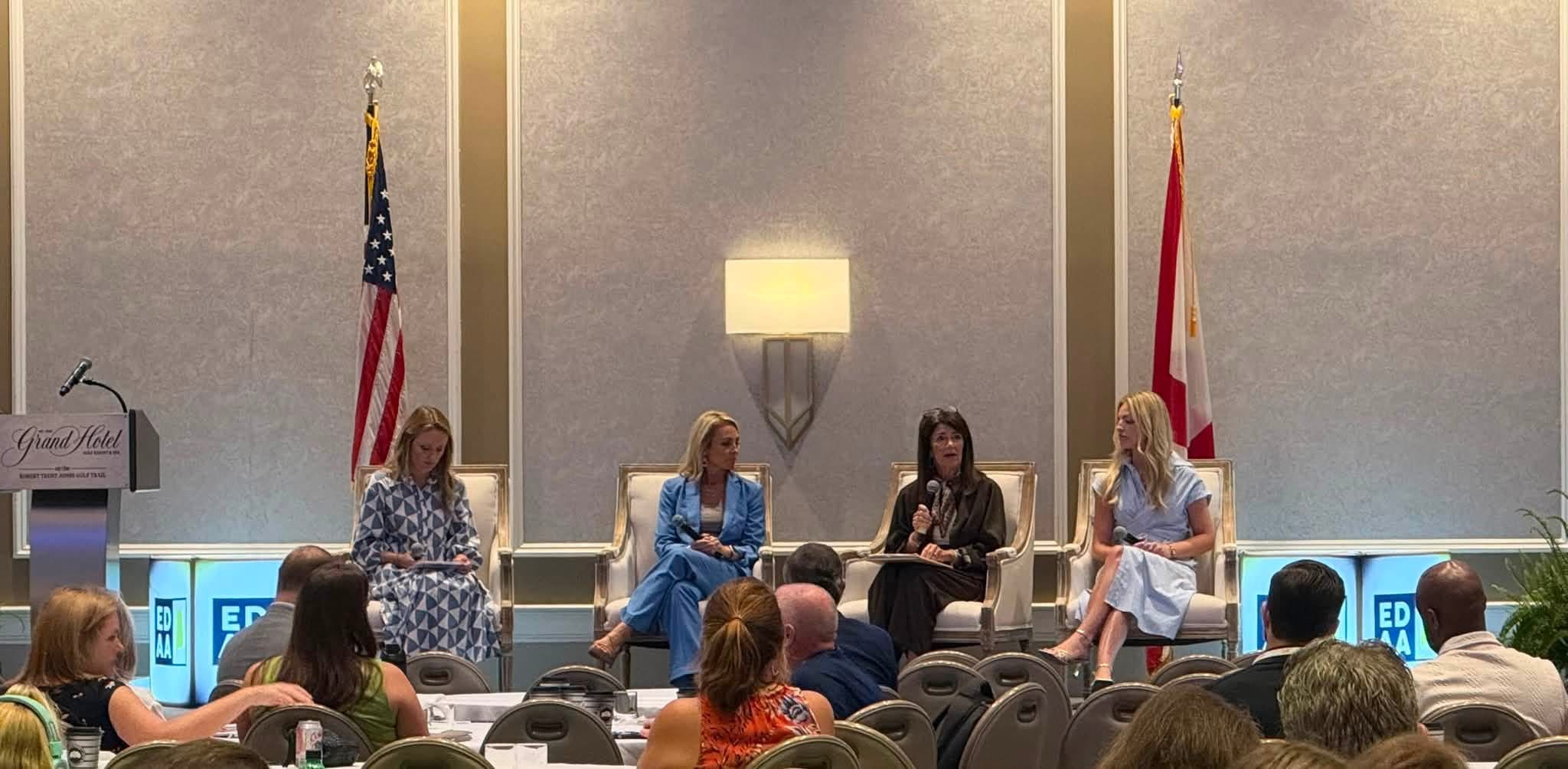
Eller recently participated in the Economic Development Association of Alabama Summer Conference panel “Retail: Preparing for Shows.” The session examined major retail recruitment conferences and how communities can make the most of the time and money invested in attending them.
“One of the biggest takeaways from the panel was that there isn’t a one-size-fits-all approach to retail recruitment,” Eller said. “Every community has different goals, budgets and opportunities, so it’s important to choose the retail events that best fit your strategy rather than trying to attend everything.”
The conferences provide different levels of access to retailers, developers, brokers and site-selection representatives.
ICSC Las Vegas, formerly known as the International Council of Shopping Centers, is the largest retail conference in the world, attracting more than 25,000 industry professionals. Eller said many meetings with retailers are scheduled months before the conference begins.
The event also includes the Annual Alabama Retail Reception, hosted by EDAA’s Retail Economic Development Committee. Eller serves as chairperson of the committee.
“We work throughout the year to ensure the right retailers, developers, brokers and economic developers are in the room,” she said. “Our goal is to create meaningful networking opportunities that help Alabama communities build relationships with the people making retail location decisions.”
ICSC Southeast in Atlanta offers a more manageable setting for smaller communities and first-time attendees. Eller said many Alabama communities can attend as a day trip. An Alabama Retail Reception on the conference floor also provides access to retailers and industry partners without competing with numerous off-site events.
Retail Live in Nashville follows a different format, which she described as “retail speed dating.”
Retail representatives begin the conference by introducing their companies and explaining their expansion plans, preferred markets and site requirements. Attendees then meet directly with those representatives on the trade show floor.
Companies represented can range from convenience stores and quick-service restaurants to grocery stores, specialty businesses and large merchandise chains.
“That format removes many of the barriers communities face when trying to schedule appointments and gives attendees the opportunity to have meaningful, one-on-one conversations with the people responsible for site selection,” she said.
The event also provides a directory containing contact information and site criteria that communities can use after the conference.
Preparation helps communities compete
Eller said one of the panel’s most discussed topics was how smaller communities can compete for retail development.
“Success isn’t determined by the size of your community. It’s determined by preparation,” Eller said. “Communities that know their market, have current demographic and site information, build relationships before asking for projects and consistently follow up are the ones that stand out.”
Retail recruitment is based largely on relationships, she said. Conferences may not produce an immediate commitment, but they allow communities to establish credibility, remain visible and develop connections with the people responsible for expansion decisions.
The goal is to ensure Cullman is already part of the conversation when a company begins looking for a new location.
Preparation begins months before CEDA representatives arrive at a conference.
Eller said retailers increasingly rely on state or regional representatives, including third-party consultants, to identify markets and sites that match their expansion strategies. Communities can no longer depend solely on contacting a company’s corporate office.
“Our job is to make sure Cullman is on that list,” she said.
CEDA gathers information about traffic counts, population trends, retail sales, available properties, established national brands and Cullman’s strongest commercial corridors.
Retailers also want to know where residential growth is occurring, whether the community is experiencing sustained growth and what public or private investments may be planned.
Road access is another factor, particularly when a site is located along a state or federal highway.
Retailers also want information that cannot be found in a standard demographic report.
“They want to know what draws people to our community, what makes our market unique and why customers choose to shop here,” Eller said. “Much of that information isn’t readily available in a report, so our preparation is really about gathering local knowledge and presenting a compelling case for why Cullman is a strong fit for their brand.”
Why retailers consider Cullman
Eller said Cullman’s retail growth has resulted from long-term planning, infrastructure investment and efforts to create an environment where businesses can succeed.
“Cullman’s retail success hasn’t happened by accident,” she said.
Retailers follow growth, and Cullman continues to experience residential, industrial and commercial development. Its location along Interstate 65 also gives businesses access to a regional customer base extending beyond the city limits.
Investments in infrastructure and quality of life provide additional confidence that Cullman can support continued growth.
“Retailers want to see success, and they can see it here,” Eller said.
The City of Cullman has invested in downtown streetscapes, public spaces and infrastructure. Local business and property owners have renovated buildings, opened new businesses and created destinations that attract residents and visitors.
Those public and private investments have helped create a walkable downtown while commercial corridors north and south of the city’s center have continued to grow.
“What makes Cullman unique is that we don’t have just one successful retail area. We have multiple thriving commercial districts,” Eller said. “Instead of one area thriving at the expense of another, we’re seeing growth across the community.”
Attractions and events also demonstrate that Cullman draws customers from outside the immediate area.
Eller pointed to the OmniPlex, Heritage Park, WildWater, Oktoberfest and Christkindlmarkt as examples of destinations that bring people to Cullman for recreation, entertainment and special events.
“That reinforces what retailers want to know, that our market extends well beyond our city limits and that customers are already choosing Cullman as a destination,” Eller said.
Safety and quality of life also influence investment decisions.
“Cullman is known as a safe, welcoming community, and that’s important to retailers,” Eller said. “They want locations where customers feel comfortable shopping and where employees feel good about coming to work every day.”
Existing businesses also help demonstrate the strength of the market. Retailers study population growth, traffic counts, consumer demand and sales activity before selecting a location.
When national companies see established businesses succeeding in Cullman, Eller said, they may identify the community as a market they want to enter.
CEDA does not determine whether a retailer is allowed to locate in Cullman. If a proposed use complies with zoning requirements and other applicable regulations, the company generally has the right to operate in the community.
The agency’s role is to provide information, identify potential sites and connect retailers with property owners, commercial real estate professionals and local officials.
“We help answer questions, remove obstacles where we can and ensure they have the information they need to make informed decisions,” Eller said.
From conversation to opening
Recruiting a retailer is rarely a quick process.
Some projects may move from an initial conversation to opening within several months. Others can take years.
Eller maintains information about available properties, their owners and the commercial real estate professionals representing them.
“I don’t take the place of a commercial realtor,” Eller said. “My goal is to help connect retailers with the property owners and real estate professionals who represent those sites.”
Once a potential site is identified, CEDA works with the city’s building department to determine whether the proposed development is compatible with zoning requirements.
Officials also examine whether utilities, transportation access and other infrastructure are available to support the project.
CEDA remains involved when questions or obstacles arise, helping developers connect with the appropriate departments, agencies and service providers.
“Economic development is really about building relationships, solving problems and making the process as smooth as possible for everyone involved,” Eller said.
Residents may not see that work until a public announcement is made or construction begins.
“By the time residents see a ‘Coming Soon’ sign, there’s often been months, or even years, of work behind the scenes involving site selection, planning, coordination and collaboration,” Eller said.
Partnerships and incentives
Eller said no single person or organization recruits a retailer or completes a commercial development project alone.
CEDA may make the initial contact or identify an opportunity, but finishing a project can require assistance from the City of Cullman, Cullman County, utilities, transportation officials, property owners, commercial real estate professionals, local businesses and elected officials.
The city plays a central role through planning, zoning, permitting and infrastructure.
“Rather than sending a prospect from office to office, we work together to find solutions, answer questions and help keep the project moving forward,” Eller said. “That collaborative approach gives retailers confidence that they have an entire community invested in their success.”
Supporting businesses after they open is also important, she said. Businesses that have strong local partners may be more likely to expand, reinvest and recommend Cullman to others.
The partnership between the City of Cullman and Cullman County has expanded from industrial recruitment into retail and commercial development.
Eller said the countywide sales-tax structure has encouraged cooperation because growth in one area can benefit the entire county.
“By working together, we can share in strategic investments that help attract new development without placing the entire financial responsibility on one entity,” Eller said.
Retail incentives can be part of that strategy.
Eller said incentives are not used for every project, but they have become increasingly common as communities compete for retailers, restaurants and mixed-use developments.
“In Cullman, we view incentives as an investment rather than an expense,” Eller said.
Projects are evaluated to determine whether an incentive could generate new sales-tax revenue, create jobs, encourage private investment and provide additional opportunities for residents.
“Every project is evaluated carefully to ensure the community receives a positive return on its investment,” Eller said. “Today’s investment creates tomorrow’s tax base, providing benefits that continue long after the initial incentive has ended.”
Protecting projects until they are ready
CEDA frequently receives questions about why the names of prospective retailers are not announced earlier.
Eller said confidentiality is intended to protect projects while companies evaluate sites, negotiate for property and compare communities.
Releasing information too early could affect real estate negotiations, alert competing communities or expose proprietary business information. It could also create public expectations for a project that has not been finalized.
Economic conditions or a company’s business strategy may also change before an agreement is completed.
“Our responsibility is to protect the integrity of the process while providing accurate information when it’s appropriate to do so,” Eller said. “We understand that residents are excited about new development, but we’d much rather announce a project when it’s real and moving forward than celebrate something prematurely that never comes to fruition.”
Balancing growth and Cullman’s character
Eller said retail continues to evolve as customers seek convenience, choices and experiences.
National retailers remain important, but consumers are also looking for locally owned stores, distinctive restaurants, boutiques and shopping areas with a sense of place.
“There’s a growing appreciation for the charm and personality of small-town shopping districts where people can browse, gather and support local businesses while enjoying a sense of community,” Eller said.
Cullman’s challenge is to continue growing while preserving the qualities that attract residents, businesses and visitors.
Eller expects continued investment along Cullman’s commercial corridors, redevelopment of existing properties and additional dining and entertainment options.
Some projects are already progressing, she said. Others remain early conversations that may take several years to produce visible results.
“The biggest thing I’d encourage residents to remember is that economic development is a long game,” Eller said. “Many of the businesses opening today are the result of conversations that started years ago.”
CEDA will continue identifying opportunities, developing relationships and preparing information so Cullman is positioned to compete when retailers begin considering new markets.
“We’re constantly planting seeds, building relationships and preparing for opportunities so that when the timing is right, Cullman is ready,” Eller said.
What retailers examine before selecting a community
- Population and residential growth
- Traffic counts and road access
- Retail sales and consumer demand
- Available sites and infrastructure
- Existing national and regional retailers
- Regional customer draw
- Quality of life and community safety
- Planned public and private investment