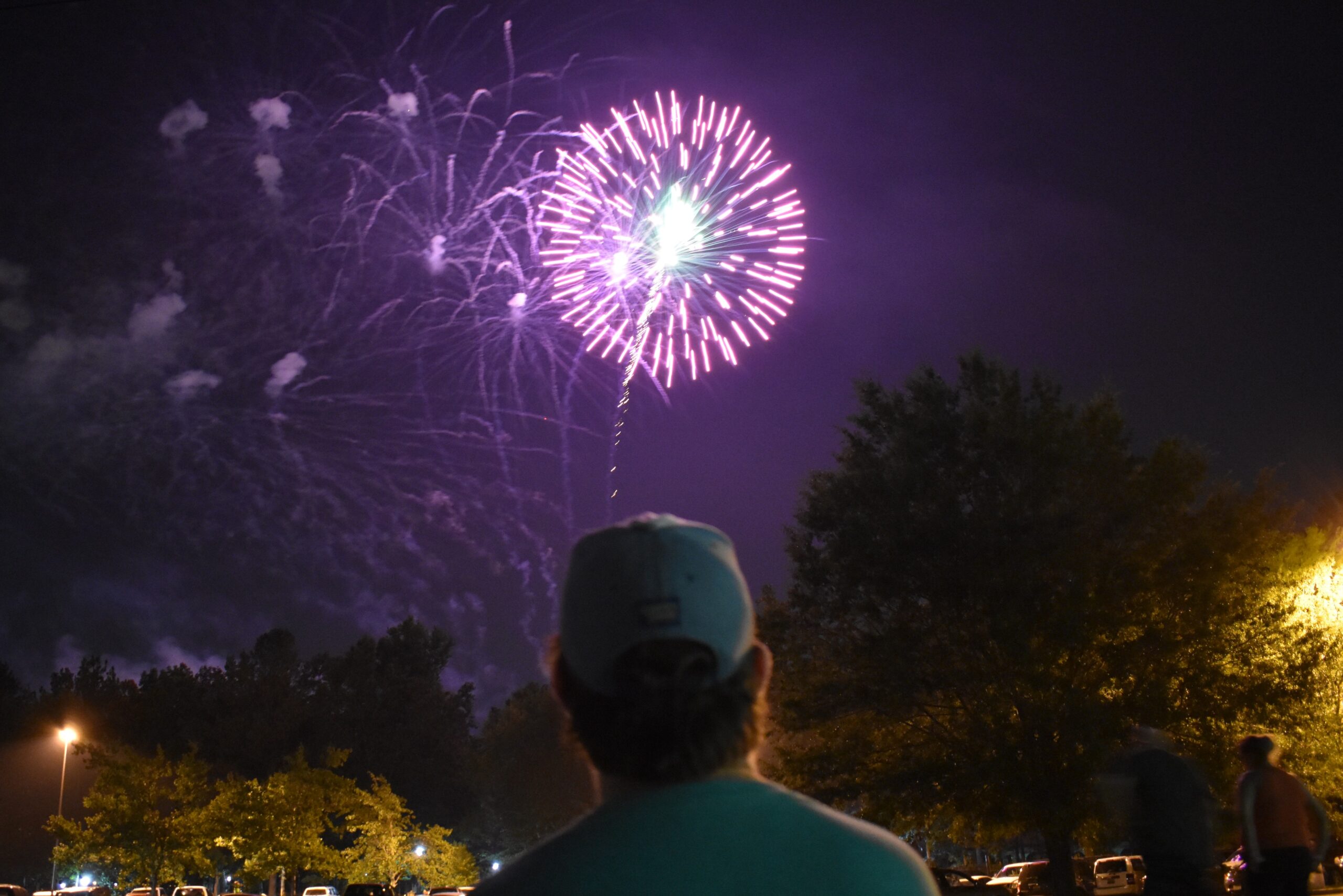
CULLMAN, Ala. – Fireworks are a familiar part of Independence Day celebrations, but local and state officials are reminding residents to know the law, watch the weather and take basic fire precautions before lighting anything.
The Alabama Cooperative Extension System is urging residents to use extra caution around dry grass, pine straw, wooded areas, homes and other structures.
Andrea Robards, a forestry, wildlife and natural resources Extension agent at Auburn University, said Alabama’s summer heat can dry ground fuels quickly, even after rain.
“It is pretty amazing how quickly our ground fuels can dry out in the absence of rain,” Robards said. “Even after a period of heavy rain like we’ve been experiencing, the summer sun can dry out grass, leaves and other ground cover quickly.”
ACES recommends choosing a large, open launch area with little or no vegetation. As a general safety rule, fireworks should be used about 300 feet from forests, woodlands, fields and grasslands, and at least 150 feet from homes and other buildings.
Robards also recommends clearing leaves, pine straw, grass clippings and other flammable materials from the launch area with a leaf blower, rake or broom. A non-combustible surface, such as concrete, is best.
Local laws vary across Cullman County.
In the city of Cullman, consumer-grade fireworks are prohibited inside city limits. Fireworks also cannot be sold, manufactured or stored in the city. Professional fireworks displays are handled separately and require proper approval.
Cullman’s special event materials also state that events involving pyrotechnics must be submitted to the Cullman City Council 30 days before the event, and organizers must contact the fire marshal for city and state requirements.
Events involving amplified music, speaking or excessive noise must conclude by 10 p.m. unless otherwise approved. Noise complaints are investigated by the Cullman Police Department.
In Hanceville, fireworks may only be discharged during specific holiday windows unless a variance is granted. Under Hanceville Ordinance No. 581, fireworks may be discharged after 5 p.m. July 4 and from midnight until 1 a.m. July 5. The ordinance also allows fireworks after 5 p.m. Dec. 31 and from midnight until 1 a.m. Jan. 1.
Hanceville prohibits bottle rockets, rockets of all types and certain aerial fireworks. The ordinance also prohibits fireworks on sidewalks, streets, alleys, city parks, public property or inside buildings. Violations may carry a fine of up to $500 or imprisonment of up to 180 days, or both.
In Good Hope, private residents may use fireworks for personal use, but public pyrotechnic displays are regulated and require proper permitting. Public displays must be submitted to the Good Hope City Council at least 30 days before the planned event and require proof of a state fire marshal permit.
Residents in other Cullman County municipalities or in unincorporated areas should check with their town hall, fire department or the Cullman County Sheriff’s Office before buying or discharging fireworks. Local ordinances may be stricter than state law.
State law also places limits on where fireworks may be used. The Alabama State Fire Marshal’s Office states fireworks may not be ignited within 600 feet of any church, hospital, public school or enclosed building, within 200 feet of where fireworks are stored or sold, from or into a motor vehicle or toward another person or group of people. Illegal devices such as M-80s and cherry bombs are prohibited.
Weather should also be part of the decision. ACES said high wind, low humidity, drought and high temperatures can increase fire danger. Robards said fire danger increases when relative humidity falls below 30%, especially when wind is also present.
“Many wildfires occur under drought conditions because fuels ignite more readily and burn more intensely,” Robards said.
The National Weather Service issues fire weather watches and red flag warnings when conditions are favorable for rapid fire growth. If those alerts are in effect, fireworks should be avoided.
If a fire starts, call 911 immediately, even if it appears small. Robards said callers should provide an exact location and remove anything that could slow emergency access, such as locked gates or barriers.
“Wildfires in pine straw, grasses and brush can spread quickly and may reignite after appearing extinguished,” Robards said. “Early notification gives firefighters the best chance to contain the fire before it threatens people, property or natural resources.”
After fireworks are used, allow them to cool, soak them in water and place them in a noncombustible container, such as a metal trash can. Residents should also check the area for smoldering debris.
“Proper disposal and post-event inspection can help prevent accidental fires,” Robards said.
Fireworks debris can also harm wildlife, soil and waterways. Cleaning up paper, plastic and metal waste quickly helps protect nearby yards, fields, creeks and natural areas.
Safety reminders:
- Never let young children handle fireworks or sparklers.
- Never use fireworks while impaired by alcohol or drugs.
- Light fireworks one at a time, then move back quickly.
- Keep a hose, bucket of water or fire extinguisher nearby.
- Never relight or pick up a malfunctioning firework.
- Keep pets indoors and secure before fireworks begin.
- Anyone who sees a fire, injury, unsafe fireworks activity or emergency should call 911.