







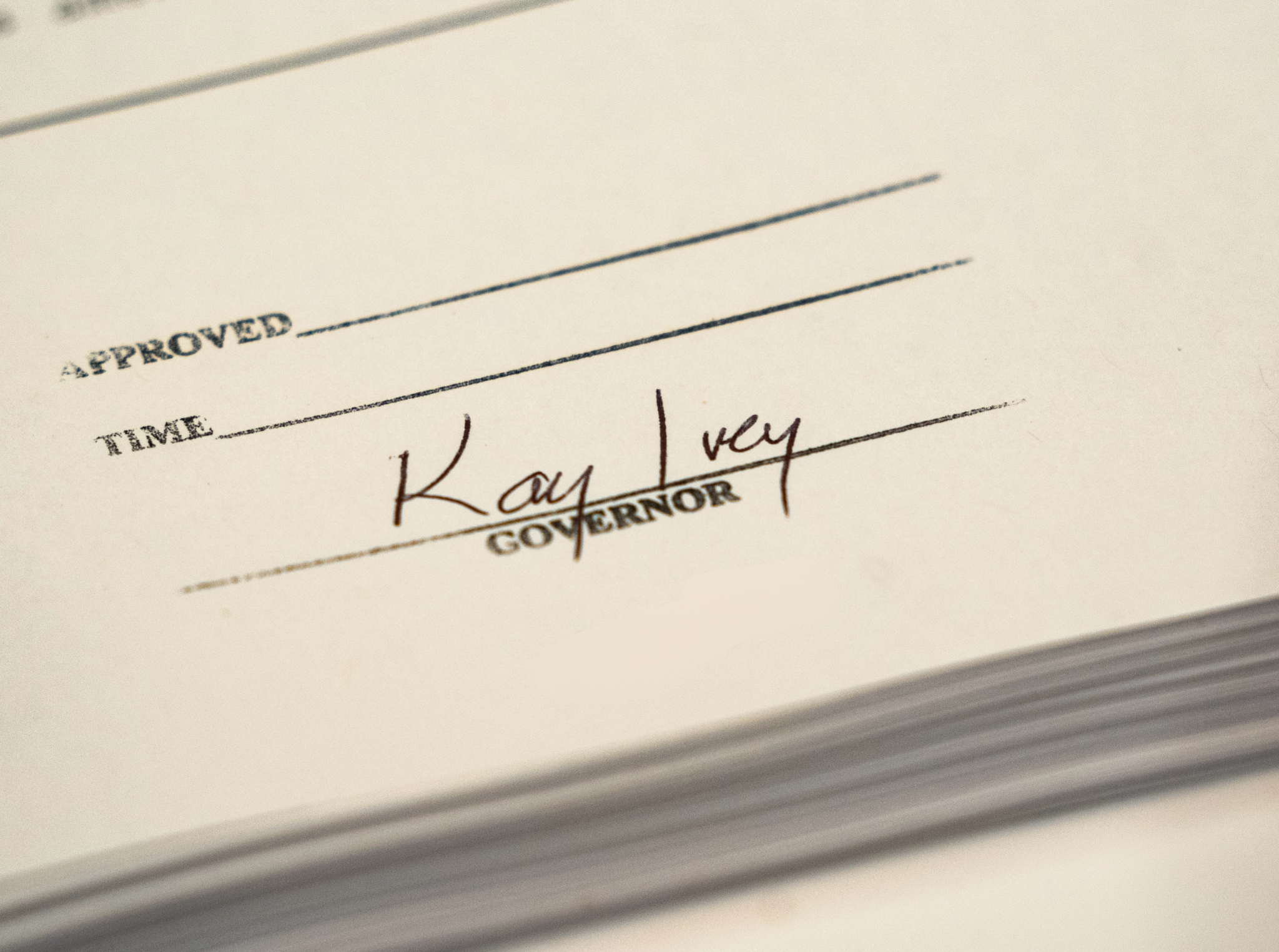
MONTGOMERY, Ala. – Gov. Kay Ivey signed two bills Friday, May 8, giving her authority to call special elections in certain congressional and state Senate districts if courts allow Alabama to use earlier maps during the 2026 election cycle.
House Bill 1 and Senate Bill 1 were passed during a special session called by Ivey after the U.S. Supreme Court issued its April 29 ruling in Louisiana v. Callais, a redistricting case involving congressional maps, race and the Voting Rights Act.
The new laws do not immediately replace Alabama’s current election maps. Instead, they create a process for the State to move quickly if existing court orders are lifted in Alabama’s congressional or state senate redistricting cases.
“With this special session successfully behind us, Alabama now stands ready to quickly act, should the courts issue favorable rulings in our ongoing redistricting cases,” Ivey said. “I thank the Legislature for answering my call to address the issue in fast order. I am grateful to Speaker Ledbetter and Pro Tem Gudger for their strong leadership and focus this week. Alabama knows our state, our people and our districts best.”
Ivey’s office said the May 19, 2026, Primary Election remains scheduled to proceed. If injunctions are lifted, the governor could call special elections in districts affected by a return to the Legislature’s 2021 state senate map or 2023 congressional map.
Senate President Pro Tem Garlan Gudger, R-Cullman, said the special session was aimed at restoring maps approved through Alabama’s legislative process rather than maps imposed through federal litigation.
“The successful special session held this week put Alabama firmly on the path toward reclaiming our congressional and legislative elections with maps that were drafted, drawn and approved by Alabamians, not by the federal courts,” Gudger said.
Gudger tied the Legislature’s action to the Supreme Court’s Louisiana v. Callais decision and to national Republican control of Congress.
“Our senators deserve recognition for working through tornado warnings, a fire alarm and State House flooding in order to embrace the Louisiana v. Callais decision and do our part to help President Trump, Speaker Mike Johnson and the Republican Party maintain control of Congress for the next several years,” Gudger said.
Gudger said the Senate’s work during the special session was also about protecting voters’ constitutional rights.
“And we accomplished all of this while protecting the two most important things guaranteed to every American by our U.S. Constitution — their voice and their vote,” Gudger said.
The Associated Press reported Friday afternoon, May 8:
Demonstrators outside the Alabama Statehouse on Friday shouted “fight for democracy” and “down with white supremacy.”
“I was out there in 1965 marching for the right to vote, and now we are back here in 2026 doing the same thing,” Betty White Boynton said.
During debate inside the statehouse, Black lawmakers said the Republican legislation harks back to the state’s shameful Jim Crow history. The new law would ignore the May 19 primary results for some congressional seats and direct the governor to schedule a new primary under revised districts, if a court allows it. Lawmakers also approved a similar bill related to state Senate districts.
“What happened here today is that we were set back as a people to the days of Reconstruction,” Democratic state Sen. Rodger Smitherman said after the vote.
Senate Democrats shouted “hell no” and “stop the steal” as senators voted.
The special primary would happen only if the courts agree to lift an injunction that put a court-selected map in place until after the 2030 census. That order required a second district where Black voters are the majority or close to it, resulting in the 2024 election of Democratic Rep. Shomari Figures, who is Black. If a court lifts the injunction, Republican officials want to put in place a map lawmakers drew in 2023 — which was rejected by a federal court — that could allow them to reclaim Figures’ district.
Attorney General Steve Marshall, who is seeking the Republican nomination for the U.S. Senate seat being vacated by Sen. Tommy Tuberville, announced Friday that he had asked the U.S. Supreme Court to lift a federal court order requiring Alabama to use the current congressional map in the May 19 primary.
Marshall’s office said Alabama is asking the court to act by May 14.
“I will continue to fight for Alabama to be able to use the congressional map the people’s elected representatives enacted,” Marshall said. “Alabama drew a map based on lawful policy goals, not race, and the Supreme Court’s recent ruling vindicates that approach. We were punished for doing the right thing, and we are asking the Court to correct that now.”
Marshall’s office characterized the current congressional map as race-based and said the state’s filing argues the order requiring its use conflicts with the Supreme Court’s ruling in Louisiana v. Callais. In that case, the Supreme Court ruled against Louisiana’s congressional plan and addressed how courts should weigh race, state redistricting goals and Voting Rights Act claims.
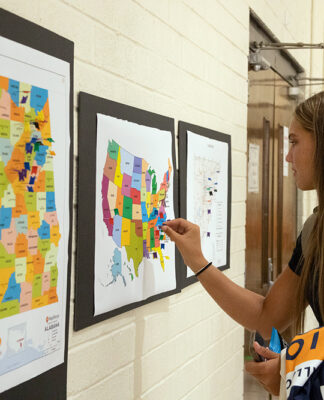
Alabama’s congressional districts have been the subject of ongoing federal litigation. The state’s 2023 congressional map was blocked, and Alabama has been operating under a court-ordered map while appeals continue.
The state senate litigation is separate from the congressional map case, but the special election legislation is structured to address both if courts allow Alabama to return to maps previously approved by the Legislature.