



CULLMAN, Ala. – Livestock producers, beginning farmers and others interested in improving cool-season grazing can participate in a free, two-part pasture management workshop this month in Cullman County.
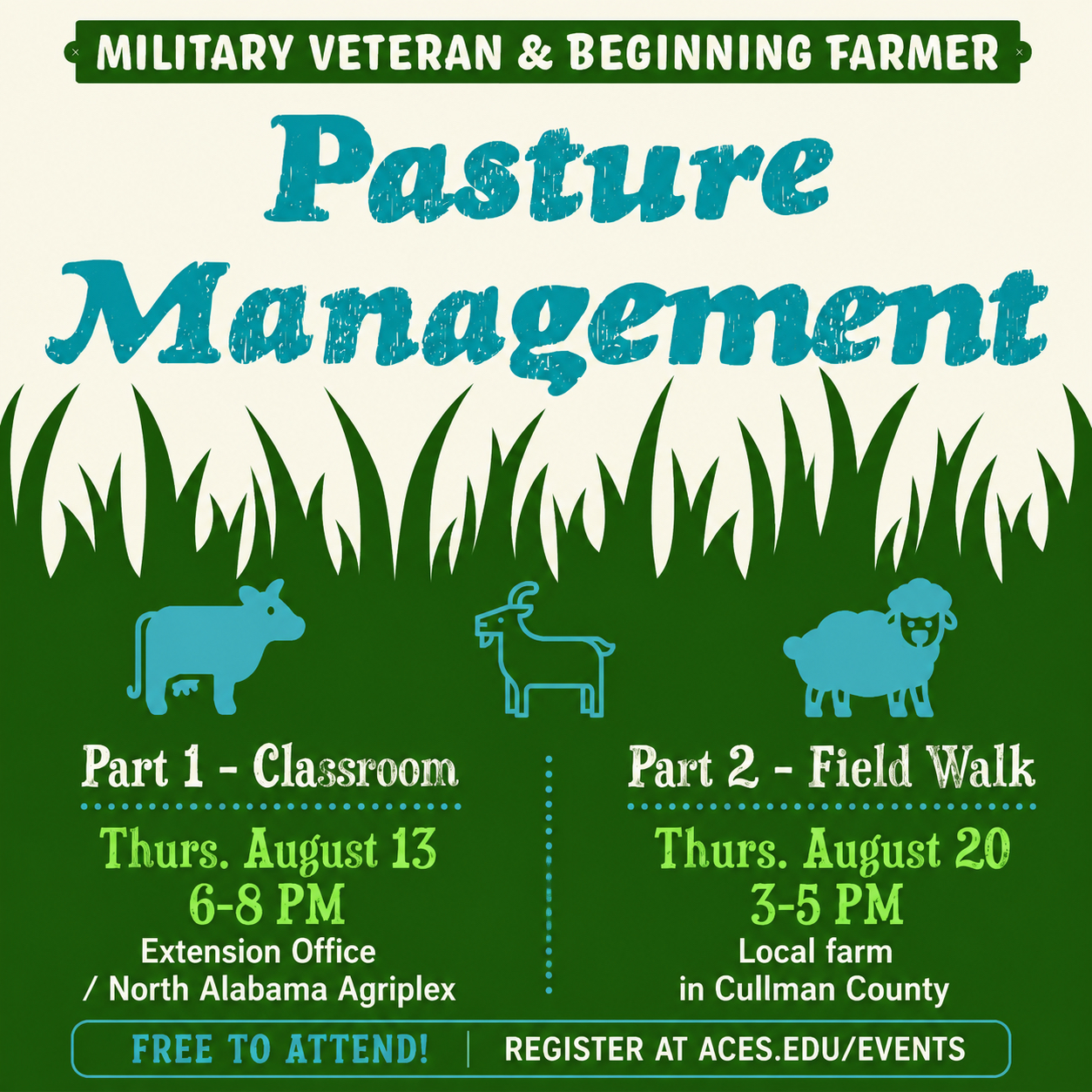
The first session will be held Thursday, Aug. 13, from 6-8 p.m. at the North Alabama Agriplex, 1714 Tally Ho St. in Cullman.
The classroom-based workshop will address the principles of effective pasture management and steps producers can take to prepare their farms and livestock for fall and winter grazing.
A field workshop will follow Thursday, Aug. 20, from 3-5 p.m. at a farm in Cullman County. The farm’s location will be provided to participants after registration.
During the pasture walk, participants will learn to identify grasses and weeds, observe grazing practices being used on the farm and receive hands-on instruction in sprayer calibration.
Both workshops are part of the Military Veteran and Beginning Farmer series offered through Alabama Extension’s Cullman County office and the North Alabama Agriplex.
The series is intended to teach practical skills to small and beginning farmers while encouraging peer-to-peer learning and mentorship from experienced producers.
Military veterans who are beginning farming operations are especially encouraged to attend.
The August workshops come as livestock producers begin preparing for the transition from warm-season pastures to fall and winter forage.
Alabama Extension reports that bermudagrass and bahiagrass growth declines as temperatures fall, often increasing producers’ dependence on hay and supplemental feed.
Overseeding established pastures with cool-season annuals can extend the grazing season and provide additional forage during late fall, winter and early spring.
Recommended planting dates for cool-season annual forages in North Alabama generally run from Aug. 25 through Oct. 1, making the workshops timely for producers planning their fall grazing systems.
Extension specialists advise producers to consider soil conditions, forage species, livestock needs, production goals and available farm resources when developing a grazing plan. Grazing frequency and intensity can affect forage yield, quality and the long-term health of a pasture.
Participation in both workshops is free, but advance registration is required for each session.
For more information, contact Cullman County Extension Director Kira Sims at 256-737-9386 or kira.sims@auburn.edu.