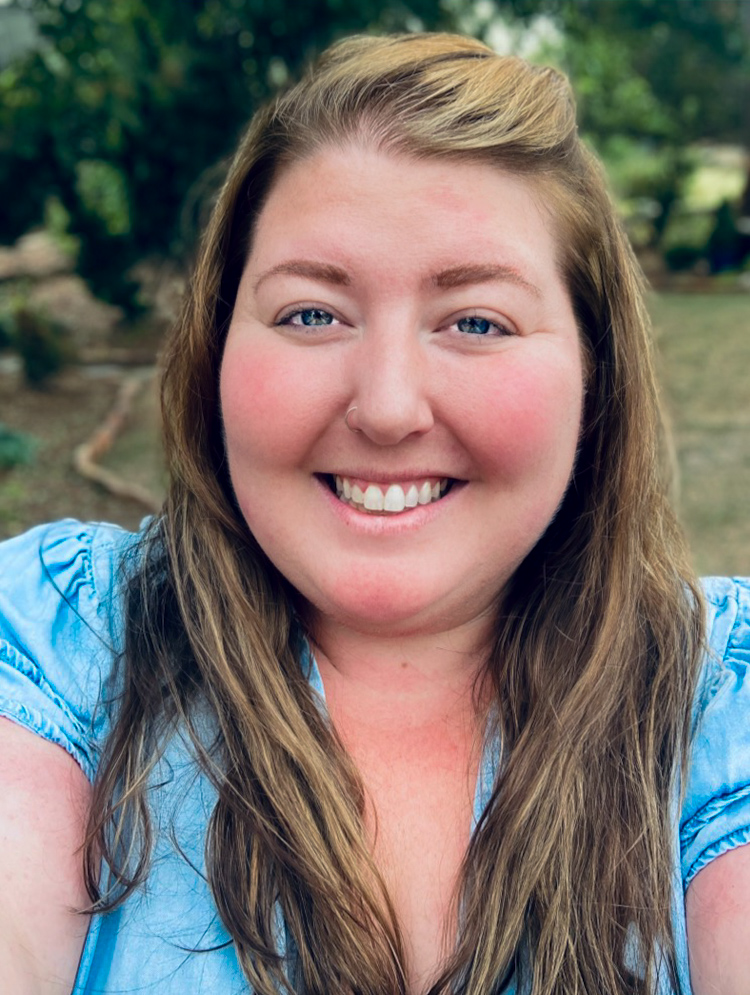
Molly Bloom, now the director of the Cullman County Museum, was born in Pennsylvania and lived in Washington state for 16 years, moved to Florida where she stayed for a few years and finally made her way to Alabama.
“So, kind of all over the place,” said Bloom, who ended up in Huntsville for the majority of her adult life.
Trying to follow in her mother’s footsteps, she enrolled at Wallace State Community College for nursing.
“I think this is such a fantastic field, but it just wasn’t what I wanted to do,” said Bloom. She left Wallace and began to think about what it is that really moves her. She asked herself what she was really passionate about. “It was history,” she noted. “I love touching things, and so I want to work in a museum one day, I wanted to work with objects and study history.”
Bloom said her love for history goes as far back as early childhood. “I never really thought that I would one day work in a museum. I also really didn’t know what I wanted to be when I was younger, but I always loved going to museums.”
Bloom said her first step was getting an undergraduate degree in history. “I went to Athens State – had some amazing professors.” She found she was the odd one out, sharing that unlike everyone else who was there to learn how to teach history, she was there to engage with it. Looking back, Bloom said, she was the only one in her class of 20 people who wasn’t getting a minor in education. “I wanted to do something different,” she stated. “I didn’t want to go to a public school or a private school and teach history.”
Getting into the museum world was competitive. “Nobody thinks about it, but it is super competitive, and it’s really hard to get into it,” she said. “I went overseas to Scotland and I went to the University of Glasgow.”
It was there where she earned her Master of Science in Material Culture and Artifact Studies and got to take part in archaeology digs. “I loved it; it was super fun!” she remembered, sharing that she got to clean, photograph and research artifacts.
Her first dig site was at a church in Govan. She described differences in the sediment, saying, “Where I was digging at, there was a clear pathway that was a completely different color than the other side.”
Shortly after returning home to Alabama, a Viking rock structure was discovered at the site. “I missed it by like three weeks!” she laughed.
Despite missing such a grand discovery, Bloom said, she was happy to be back home, saying she “missed the sun.”
Bloom said it took her a year and a half to find her place in the museum world.
“Even though I had work experience over in Glasgow, it didn’t – there was just nothing here.”
She got her break when a LinkedIn alert notified her of an opportunity at the James K. Polk Presidential Home and Museum in Columbia, Tennessee. She wasted no time in applying and landed her dream job. She looks back fondly on the memories of exhibits, working with grants and getting items for the museum. She was also able to work with historical houses, adding a personal touch to each room. “It really just kind of helped me be shaped into the person I am now in the museum world,” she shared.
Bloom was welcomed as director of the Cullman County Museum in May 2026.
When she’s not at work, Bloom is still surrounds herself with history and art. “I love antique stores,” she said. She loves looking for treasures, and arts and crafts like pottery making.
She also likes to play the piano – which is how she found one of her greatest discoveries.
“There was this beautiful pianoforte that Sarah Polk had,” she said, describing the instrument’s decorative knobs and saying if you weren’t aware of it, you’d think nothing of it. “I open everything – it’s just kind of what I do,” she laughed. When she opened a drawer she discovered a book coated in thick dust. “I pulled it out and it was a psalm and hymn book.” She explained that President Polk and Sarah Polk signed all of their books. “I was so excited because on the first page it was signed by Sarah, and I thought, ‘Oh my gosh, I found a lost book.’” After doing research she found the book was on inventory in 1919 and again in 1920, but after that it was never on an inventory again. “Someone put that book in there and just totally forgot about it,” she mused.
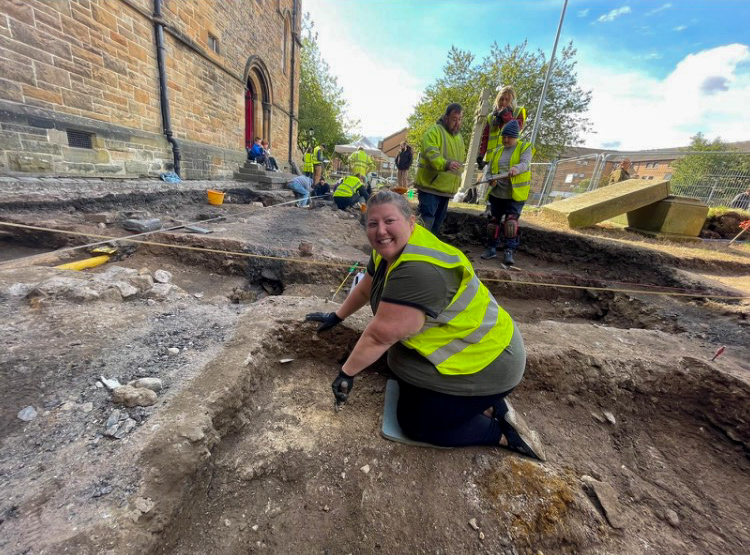
Molly Bloom (contributed)