HANCEVILLE, Ala. – The Shirley Burden Public Library in Hanceville welcomed Education Curators Christian Wysmulek and Richard Trammell from the Alabama Department of Archives & History on July 22. The pair presented “Lasting Impressions: Fossils & Artifacts” as part of the library’s summer programming.
They showcased many artifacts and fossils, including pottery, arrowheads and more to an engaged audience.
Wysmulek began with a ceramic pot made by Native Americans. He explained to the younger audience that clay is much like Play-Doh. He told them it starts out soft and dries to maintain a shape. “When you pull clay out of the ground – because clay is basically a type of dirt – it usually is something that we moisten up. So we get it wet, and then we can use it to shape a bunch of different plates, bowls, jewelry and things like that.”
He said artifacts like clay pottery end up being evidence of how people lived in the past. “Anything that is made or used by people in the past tells a little something about how they lived. They had to make their own pots because, unlike us, they couldn’t go to the store.” The children seemed fascinated by this fact.
Wysmulek moved on to the next object, which to the children looked like a rock. One in the audience shouted, “It’s like an arrow!” Indeed, he had a large arrow head. He explained, “If this were attached to a stick, some people might call it an arrowhead, like you might use for hunting.” They also showcased a smaller arrowhead that would be used for an arrow, and another, much larger arrowhead that would suit a spear.
Moving on to fossils, they explained to the children that artifacts are items made by people and fossils are the remains of living things.
Wysmulek held up an example, saying, “This is a rock, but it’s also a fossil.” He asked if they knew what kind it was, and one young audience participant suggested it may be an ammonite, seeming to impress
Trammell and Wysmulek a great deal. Others said it was maybe a muscle. They were all on the right track: sea life. What they had was indeed dried fossilized coral. Wysmulek used “Finding Nemo” as a reference point, saying, “It looks like a plant, but, I was bringing up ‘Finding Nemo’ because if you ever see, like, a clownfish and little fish, like that, a lot of little fish live among coral reefs.”
Trammell read “Fossils Tell Stories” by Yuri Kim, asking the children questions as he moved along. “Did all dinosaurs turn into fossils? Are their footprints preserved in rock fossils? Over here in this picture, you’ll see what’s called dinosaur dung. And on the other side, you’ll see dinosaur eggs. Does anyone know what dinosaur dung is?” The children comically yelled out, “Poop!” as the adult audience chuckled. “Poop. Good job,” he said. “So sometimes we can tell a lot about animals back then by looking at their poop.”
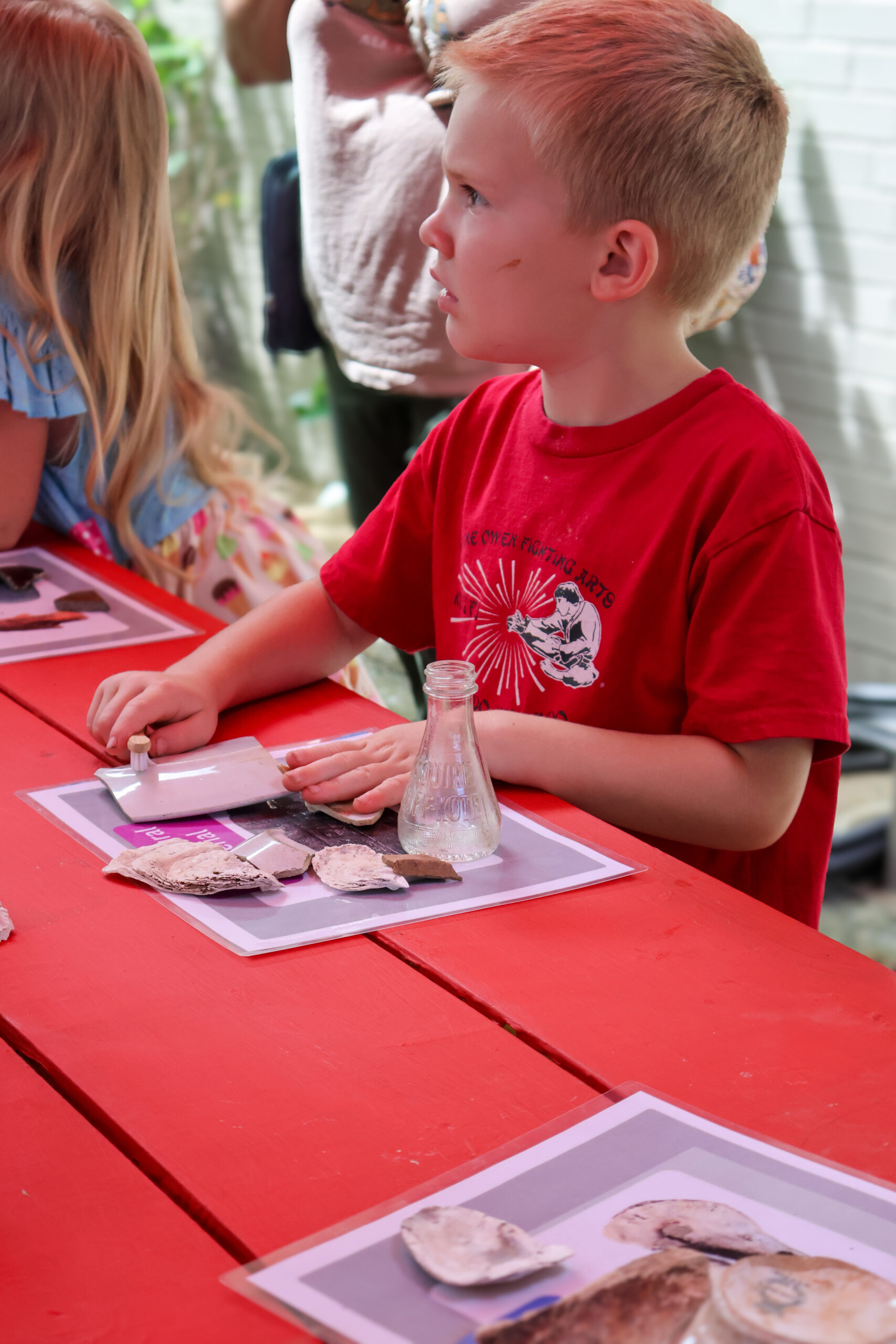
The children got to participate in some trivia before going outside to dust off artifacts and match them with the correct picture on a place mat. They also had a snack provided by the library and were given small toy dinosaurs to take home.
Wysmulek told The Tribune before the program began, “We do outreach to libraries, especially in the summer, as part of summer reading programs, back-to-school boot camps, all of these kinds of things. This summer we have a presentation prepared that is playing off the collaborative summer library program theme this year, which is ‘Unearth a Story.’”
Get more information about the Alabama Department of Archives & History at https://archives.alabama.gov/default.aspx.
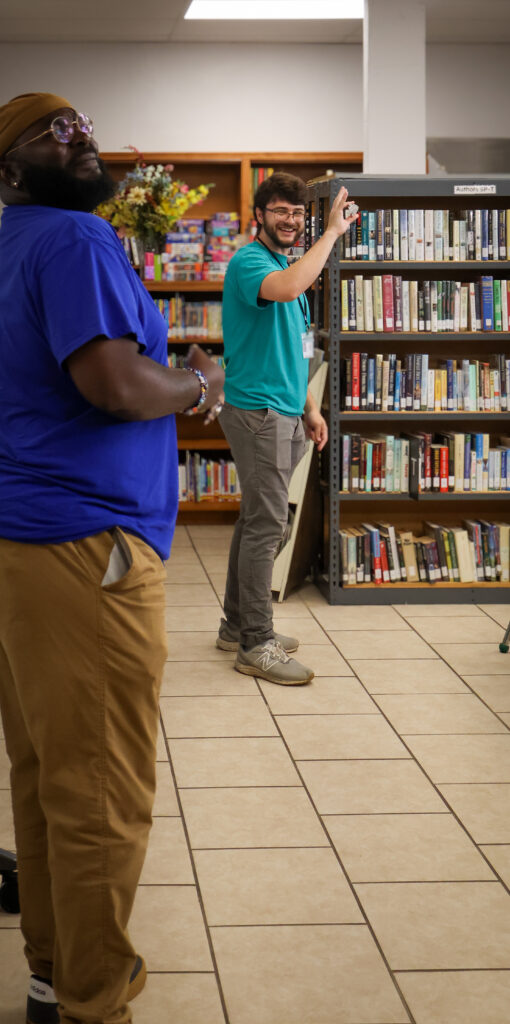
Richard Trammell (left) Christian Wysmulek (right) (Emily McMunn/The Cullman Tribune)
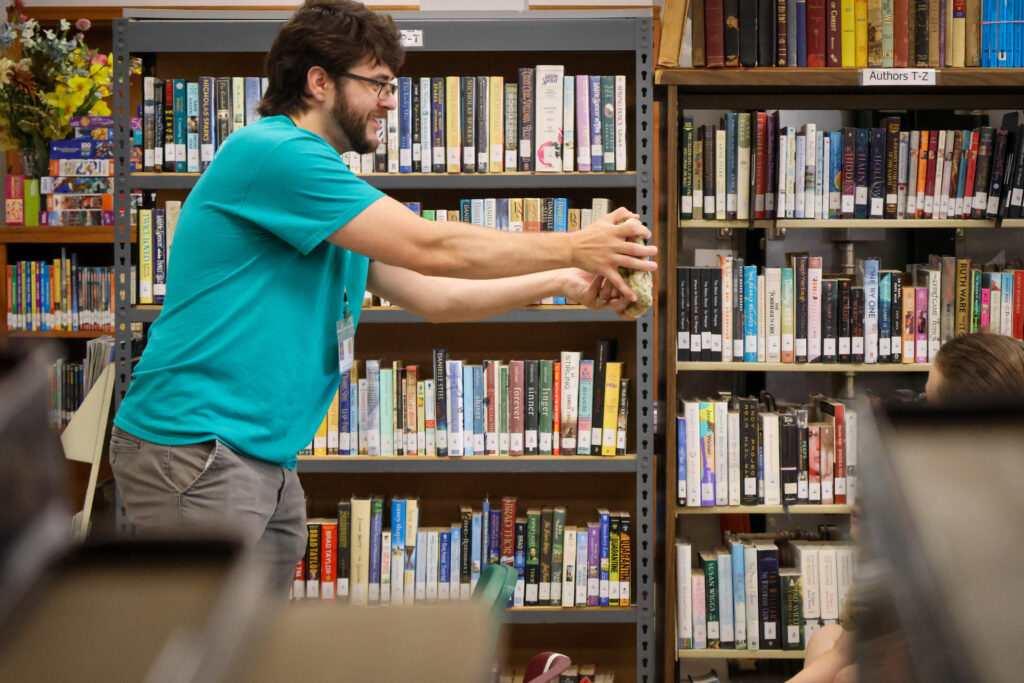
Christian Wysmulek (Emily McMunn/The Cullman Tribune)
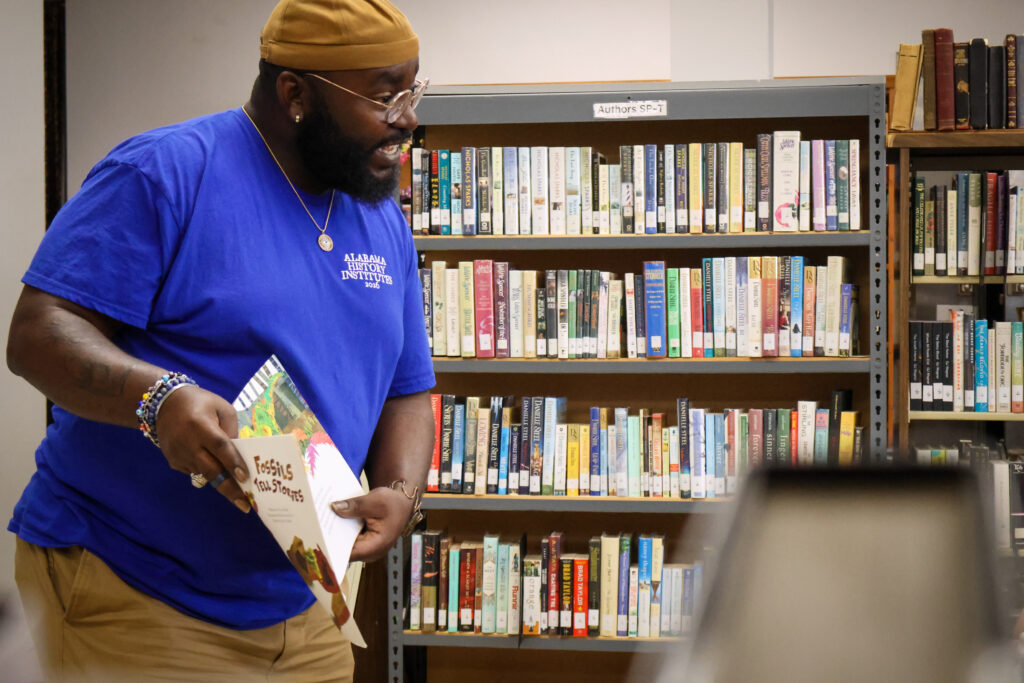
Richard Trammell (Emily McMunn/The Cullman Tribune)
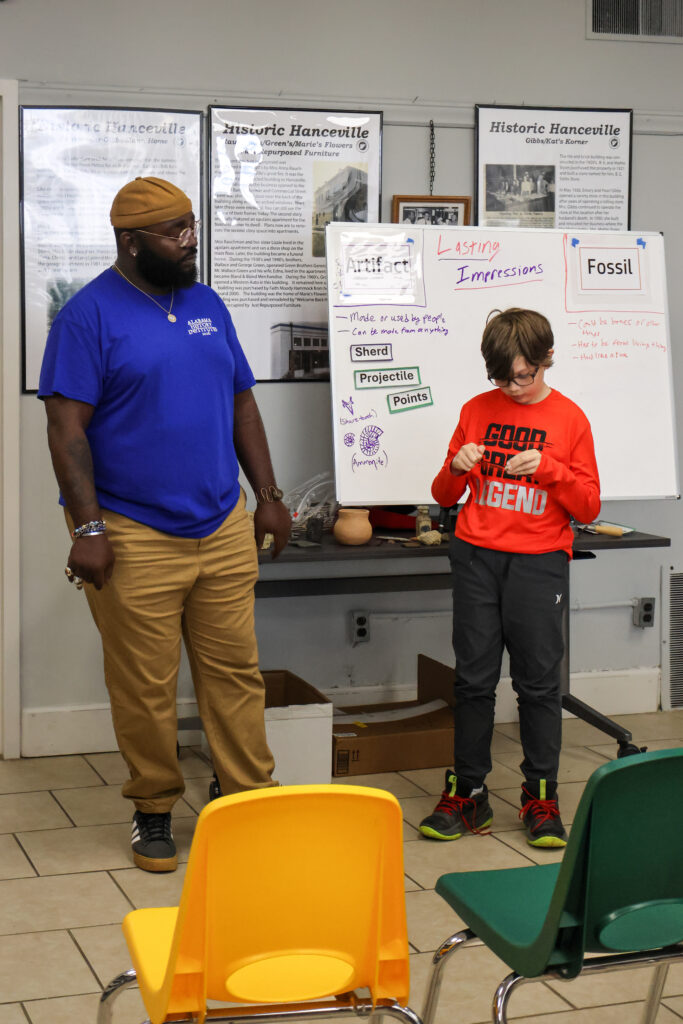
Richard Trammell (left) Gabriel Brakefield (right) (Emily McMunn/The Cullman Tribune)
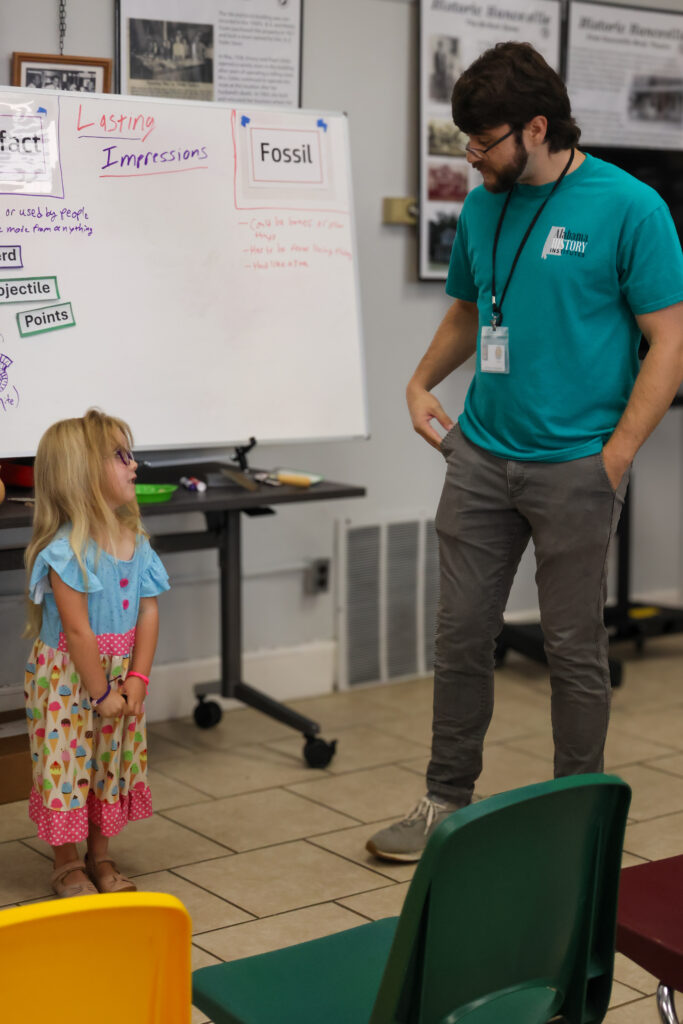
Mildred Morgan (left) Christian Wysmulek (right) (Emily McMunn/The Cullman Tribune)