




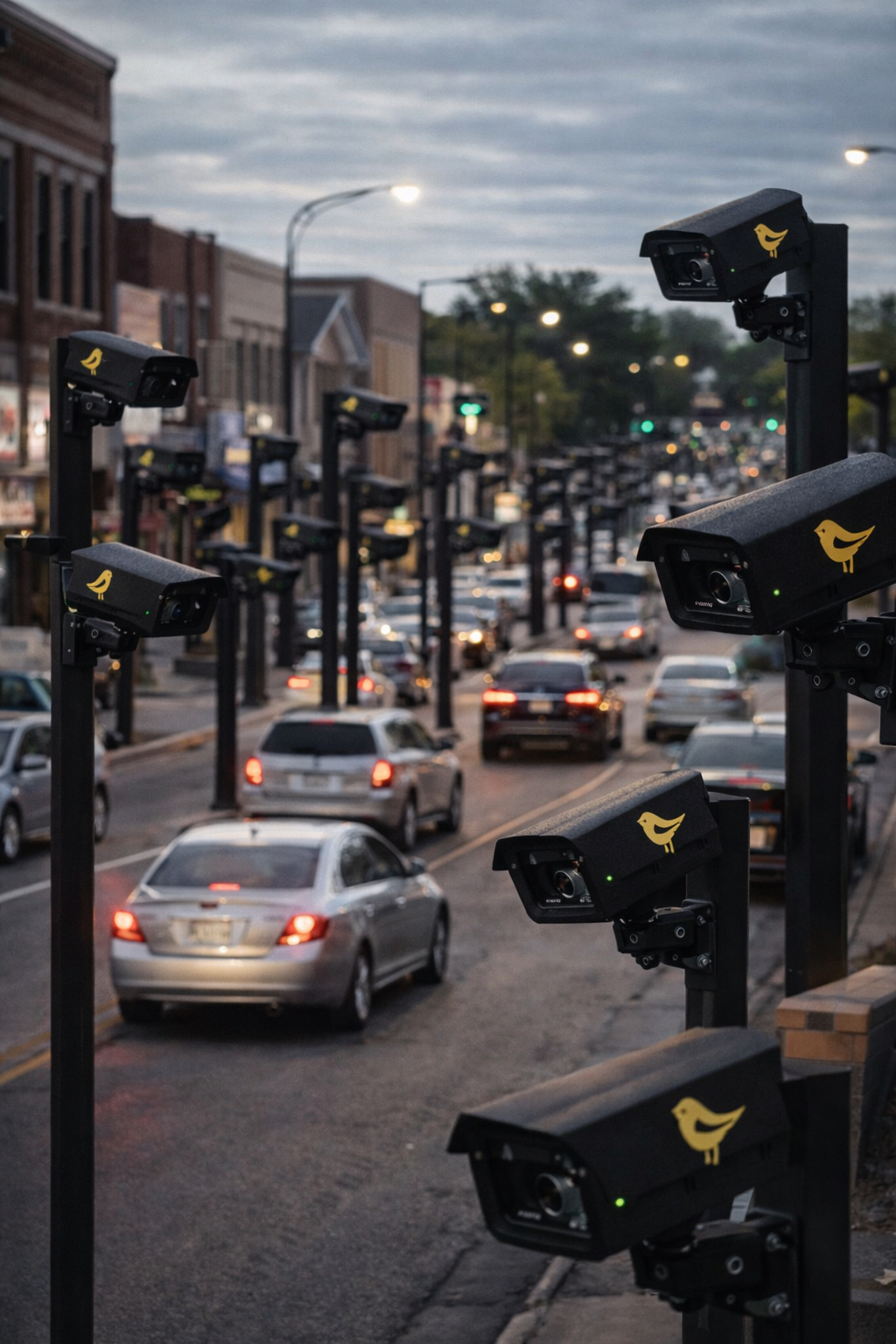
What is Flock Safety? What does it do? What does it mean for residents and visitors?
They are small, often mounted high on poles or along roadways, easy to miss unless you know what you are looking for.
But for many communities across the country, Flock cameras have become a growing part of modern policing.
The systems are operated by Flock Safety, a private company that provides automated license plate reader technology to law enforcement agencies, cities and even private neighborhoods.
The cameras capture images of passing vehicles, logging license plates, vehicle characteristics and timestamps into a searchable database.
The data collected by the system is stored on cloud servers operated by Amazon Web Services, including government-designated platforms used by law enforcement agencies.
While the company points to security and compliance standards, the use of third-party cloud infrastructure raises additional questions about who ultimately controls access to that information.
Supporters say the technology helps solve crimes, locate stolen vehicles and provide investigators with critical leads in minutes instead of hours.
Critics say it creates something else entirely.
They argue the system builds a quiet but expansive record of where people travel, often without their knowledge, raising concerns about privacy, data control and how that information may be used or shared.
The debate is not always about whether the technology works. In many cases, it does.
The debate is about what it collects, who controls it and how much the public truly understands about what is being gathered.
Flock Safety maintains that its system is designed with privacy in mind. The company says it does not use facial recognition, does not identify individuals and does not create a centralized national database.
It also says data is typically deleted after 30 days and that access is limited to authorized users.
However, a closer look at the company’s own policies, legal terms and outside reporting reveals a more complex picture.
While data is described as locally controlled, agencies can opt into broader sharing networks. While the company says it does not collect personal information, license plate data can often be linked back to individuals through existing law enforcement systems.
While the company highlights a 30-day retention window, policies indicate that time frame can vary depending on local settings and legal requirements.
In short, many of the company’s public claims are accurate, but often come with qualifiers that are not always immediately clear.
That distinction has fueled ongoing debate among civil liberties groups, policymakers and residents in communities where the cameras have been installed.
For Cullman, the questions are now local.
- Who approved the use of this technology?
- Where are the cameras located?
- What data is being collected and how long is it stored?
- Who has access to that information and how often is it used?
Those questions are not unique to Cullman, but they are becoming increasingly relevant as more communities adopt the system.
The Cullman Tribune has submitted public records requests seeking answers to those questions.
FOIA requests have been filed with the City of Cullman, Cullman Police Department, Cullman County Sheriff’s Office and Hanceville City Hall.
Wallace State Community College elected to respond to questions without requiring a formal records request.
To better understand what Flock Safety says about its technology, and how those claims compare to its own policies and outside scrutiny, The Cullman Tribune has compiled the following breakdown.
What Flock Safety says vs. what documents and critics show
Q: Does Flock Safety create a national database of vehicle data?
A: Flock says no. The company states that each law enforcement agency controls its own data and that sharing is not automatic.
However, agencies can opt into regional and national sharing networks. Critics argue that once enough agencies participate, the system effectively becomes a large, interconnected surveillance network, even if it is technically optional.
Q: Who owns the data collected by Flock cameras?
A: Flock says the customer, typically a city or law enforcement agency, owns the data.
The company’s legal terms also grant Flock a broad license to use that data to operate and improve its services, meaning control is not limited solely to the local agency.
Q: Does Flock collect personal information about individuals?
A: Flock says it only collects vehicle information and does not use facial recognition.
While technically accurate, license plates can often be linked to individuals through law enforcement databases, allowing movement tracking tied to a person.
Q: Can Flock cameras track where someone goes over time?
A: Flock says its cameras capture only single moments and do not track vehicles continuously.
Critics say that when multiple cameras are used across a city or region, those images can be combined to reconstruct travel patterns.
Q: How long is the data stored?
A: Flock says data is typically deleted after 30 days.
However, that time frame can vary depending on local policies and legal requirements.
Q: Who can access the data?
A: Flock says only authorized users can access the system and that all searches are logged.
Concerns remain about how widely data may be shared between agencies or accessed through legal processes.
Q: Has Flock faced any security concerns?
A: Flock emphasizes encryption and secure cloud storage.
Outside reporting has raised concerns about vulnerabilities and potential exposure, highlighting ongoing risks with large data systems.
Q: Does the system reduce bias in policing?
A: Flock says its technology does not use facial recognition or identify race or ethnicity.
Critics argue that tracking vehicle movement can still reveal sensitive personal patterns such as where someone lives, works or spends time.
Why it matters
The debate surrounding Flock Safety is not simply about technology. It is about oversight, transparency and how far surveillance tools should extend into everyday life.
As more communities adopt the system, the conversation is shifting from whether it works to how it is used and who is watching the watchers.
For Cullman, those answers are still taking shape.