










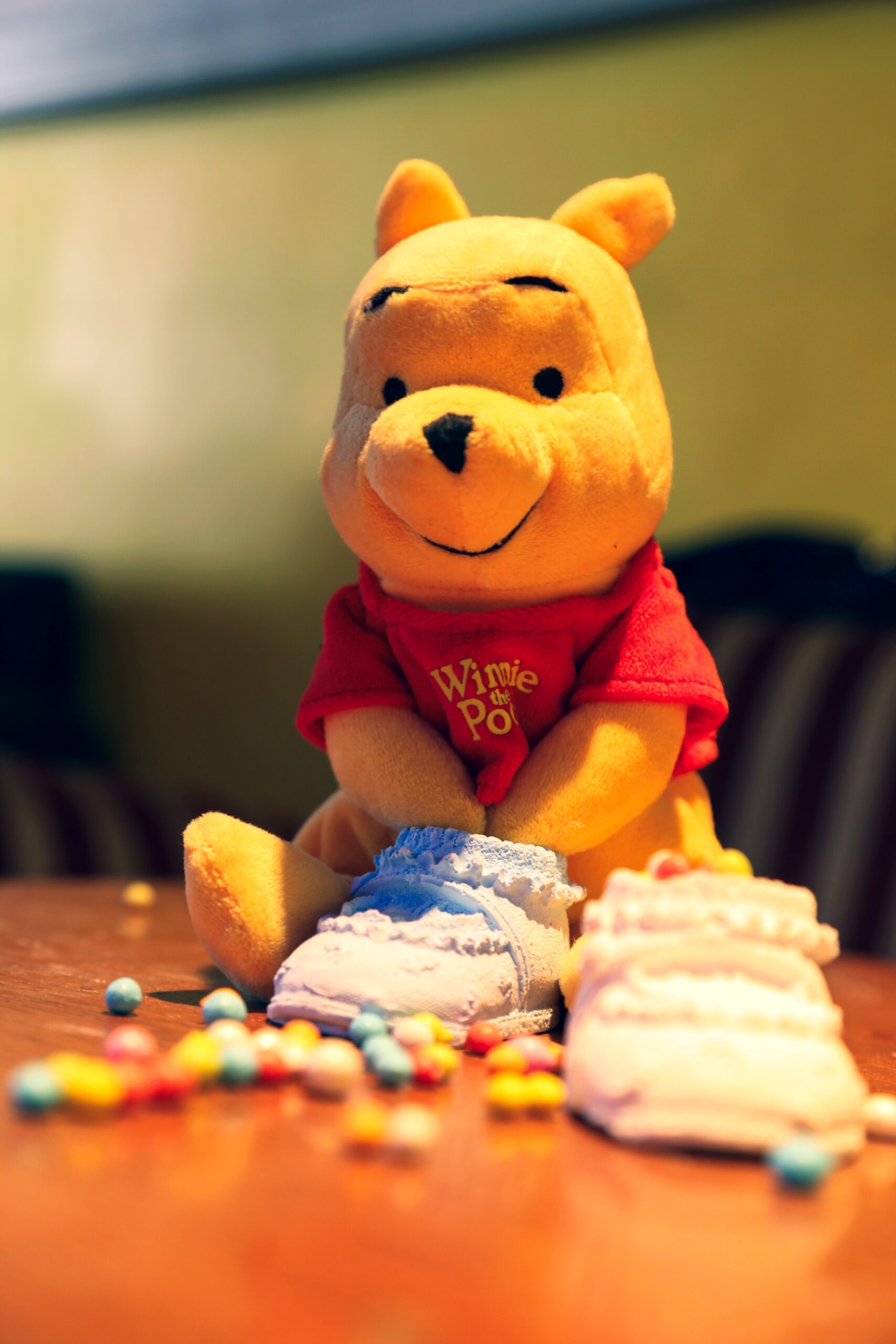
One hundred years ago, on Oct. 14, 1926, a honey-loving bear of very little brain wandered onto bookshelves for the first time. A century later, Winnie-the-Pooh is still one of the most beloved characters in children’s literature, and readers around the world are celebrating his 100th birthday.
“Winnie-the-Pooh,” written by A.A. Milne and illustrated by E.H. Shepard, was published by Methuen & Co. in London and E.P. Dutton in the United States. It was an instant hit; Dutton sold 150,000 copies before the end of 1926 alone, and the book became Milne’s best-selling work.
Pooh had actually made his first appearance a few months earlier, in a short story published in London’s Evening News on Christmas Eve 1925. But it was the 1926 book, with its adventures of Pooh, Piglet, Eeyore, Owl, Rabbit, Kanga, Roo and a little boy named Christopher Robin, that made the bear a household name.
A real boy, a real bear
The stories were born from real life. Christopher Robin Milne was the author’s son, and Pooh and his friends were his stuffed animals. His father bought the teddy bear at Harrods department store in London and gave it to him for his first birthday on Aug. 21, 1921.
The bear’s name came from a real bear, too. During World War I, Canadian soldier and veterinarian Harry Colebourn bought a black bear cub for $20 at a train station in White River, Ontario, and named her Winnipeg, after his hometown. When his unit was sent to France, “Winnie” was loaned to the London Zoo, where she became a favorite with visitors. One of her biggest fans was young Christopher Robin, who named his own teddy bear after her. The “Pooh” came from the name of a swan.
The Hundred Acre Wood was inspired by Ashdown Forest in East Sussex, England, near the Milne family’s country home. Fans still visit the forest to play Poohsticks, the game of dropping sticks off one side of a bridge and racing to see whose comes out first on the other side.
Milne followed the original book with “The House at Pooh Corner” in 1928, which introduced Tigger and closed with the line, “…in that enchanted place on the top of the forest, a little boy and his bear will always be playing.”
From the page to the screen
Disney licensed the rights to Pooh in the 1960s, and the bear made his animated debut in “Winnie the Pooh and the Honey Tree” on Feb. 4, 1966. Disney’s red-shirted Pooh introduced the character to new generations through films, television shows and theme park attractions, while Shepard’s original pen-and-ink drawings remain cherished by collectors and readers.
The bear has also traveled the globe. A Latin translation, “Winnie Ille Pu,” became the first book in a foreign language to appear on The New York Times bestseller list, in 1961.
The original 1926 book entered the public domain in the United States in 2022.
Celebrating 100 years
Birthday celebrations are happening throughout 2026. Disney launched a yearlong “Winnie the Pooh 100” campaign with the tagline “Live the Hunny Life,” featuring new books, toys and collectibles. In the United Kingdom, publisher Farshore released anniversary editions of Milne’s classic books and a new authorized sequel, “A Little Boy and His Bear,” and Ashdown Forest is hosting centenary events.
In New York, Christopher Robin’s original toys — Pooh, Piglet, Eeyore, Kanga and Tigger — remain on display at the New York Public Library, where they have lived since 1987. Roo, the baby kangaroo, was lost in an apple orchard in the 1930s. The library’s special exhibition, “Silly Old Bear! Winnie-the-Pooh at 100,” runs through Nov. 30 and features a first edition of the book and a small stuffed Roo given by Queen Camilla earlier this year.
A hundred years after his first adventure, Pooh’s simple wisdom about friendship, kindness and the joy of an afternoon spent doing nothing in particular still feels right at home on bookshelves and in bedtime stories.
As Pooh himself might say, it’s the perfect excuse for a little something sweet. Happy 100th birthday, dear old bear.