



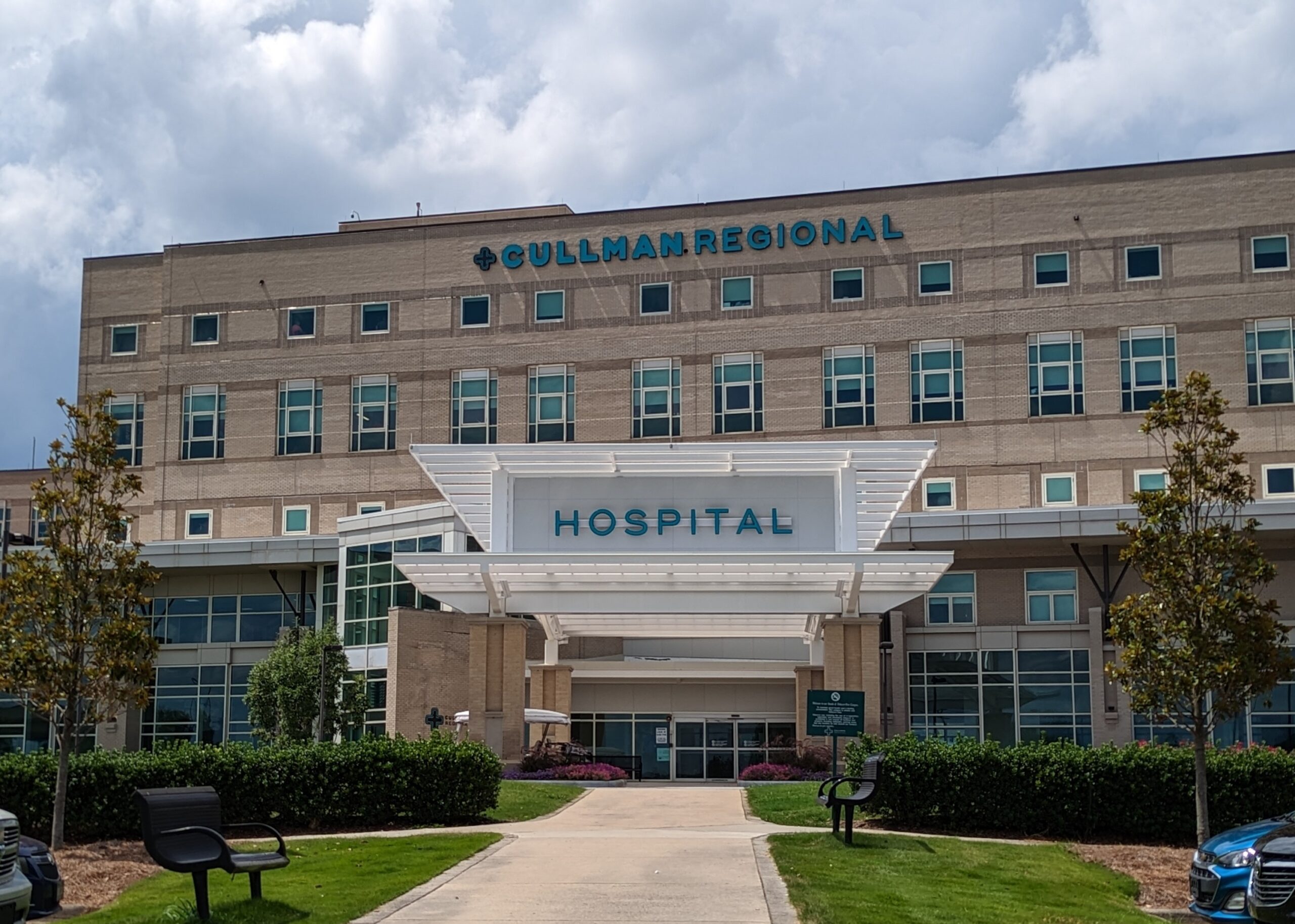
CULLMAN, Ala. – Three Cullman County projects will receive a combined $4,226,240 through the first round of Alabama Rural Health Transformation Program grants announced Monday, Aug. 24, by Gov. Kay Ivey. The largest award, $3.8 million, will go to Cullman Regional Medical Center to establish a family medicine residency training program with a focused obstetrics track.
The program is intended to prepare physicians to provide primary and maternity care in Cullman and surrounding rural communities.
BHG Cullman Treatment Center received $339,580 for technology intended to improve access to opioid treatment, medication management and continuity of care.
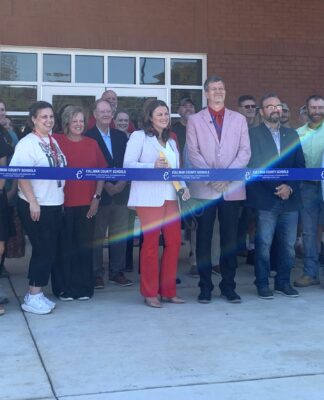
WellStone received $86,660 for its Cullman County School-Based Mental Health project, which will provide specialized tablets in every Cullman County school so students can connect with WellStone therapists through telehealth when an in-person therapist is unavailable.
The local awards are among 138 grants totaling more than $144 million for health care providers and institutions across Alabama.
The projects are supported by the Centers for Medicare & Medicaid Services through Alabama’s $203,404,326.54 federal award for the program’s first year.
“Alabama is serious about creating systematic changes through the ARHTP to ensure every citizen has access to quality care,” Ivey said. “This program is enabling institutions covering every part of the state to improve healthcare for Alabamians through projects that are both innovative and sustainable.”
Cullman Regional residency to include obstetrics focus
Cullman Regional’s award will establish a graduate medical education program in which physicians receive supervised clinical training after completing medical school.
“We’re extremely proud that our state leaders have confidence in Cullman Regional’s ability to implement such a high impact project,” said Cullman Regional CEO James Clements. “We appreciate the work and leadership of Governor Ivey, Senate President Pro Tem Garlan Gudger, the ARHTP Advisory Board including Chairman Sen. Donnie Chesteen and Vice-Chairman Rep. Jamie Kiel, Director Ken Boswell and the entire ADECA team as well as Cullman delegation members Reps. Cindy Myrex, Heath Albright and Tim Wadsworth.”
The state announcement did not identify how many residents the program will accept, its anticipated accreditation partner, when its first class could begin or how the $3.8 million will be divided among faculty, accreditation, training and other startup costs.
Cullman Regional said in a media release on Wednesday: “In addition to the residency program, Cullman Regional’s grant award includes funding for maternal and fetal health care outreach in the hospital’s seven-county service area. Adding maternity-trained physicians to areas that have little to no obstetric care will be transformative for the region and have lasting impact as the hospital continues to develop as a regional referral hub for maternal and fetal health. In 2024, Cullman Regional opened a neonatal intensive care unit (NICU) to provide highly specialized newborn care for ill and premature infants. The NICU team cares for approximately 100 babies each year which helps demonstrate the need for local, comprehensive maternal and fetal health services in central North Alabama.”
The Alabama Department of Economic and Community Affairs’ Rural Workforce Initiative rules allow funding for establishing and expanding graduate medical education programs, accreditation support, faculty expenses and resident training.
The rules also require applicants to address long-term viability because an initial award does not guarantee funding in later program years.
The obstetrics component builds on Cullman Regional’s recent expansion of maternity and newborn services.
The hospital expanded its obstetrics program in 2024 by adding a fourth OB-GYN physician, six neonatologists and four neonatal nurse practitioners. It opened a neonatal intensive care unit in June 2024 and began providing around-the-clock specialty care for newborns.
Treatment and school mental health projects
BHG Cullman Treatment Center, located at 1912 Commerce Ave. NW, is an adult opioid treatment program recognized by the Alabama Department of Mental Health.
The center provides medication-based treatment, including methadone, buprenorphine and naltrexone, along with individual and group counseling and peer recovery support.
The grant announcement said BHG will use its $339,580 award to implement technology supporting treatment access, medication management and continuity of care. It did not identify the equipment or software to be purchased, the expected increase in treatment capacity or a rollout date.
WellStone’s $86,660 project is intended to address gaps when a therapist cannot be physically present at a Cullman County school.
The tablets will allow school personnel to connect students with WellStone therapists through telehealth. WellStone already provides school-based behavioral health services in Cullman County and Cullman City schools.
Local grant administration
The grants are structured as federal subawards administered by ADECA rather than unrestricted lump-sum payments. Under the Rural Workforce Initiative rules governing Cullman Regional’s award, recipients are reimbursed monthly for documented and allowable expenses within the approved budget and scope of work.
The anticipated performance period runs through July 31, 2027, unless ADECA specifies otherwise.
Recipients must maintain financial records and internal controls and submit quarterly progress reports addressing expenditures, milestones, delays and performance measures.
ADECA may conduct document reviews, monitoring calls and on-site monitoring. Costs determined to be outside an approved project or otherwise unallowable may be disallowed or recouped.
The governor’s office said the initial awards followed six public information meetings, five grant workshops and hundreds of applications. The state’s plan identifies Cullman as one of 58 Alabama counties considered rural or partially rural for purposes of the program.
“To say that there is great interest in improving rural healthcare in Alabama is an understatement,” ADECA Director Kenneth Boswell said. “We are excited to now see so many projects moving forward.”