



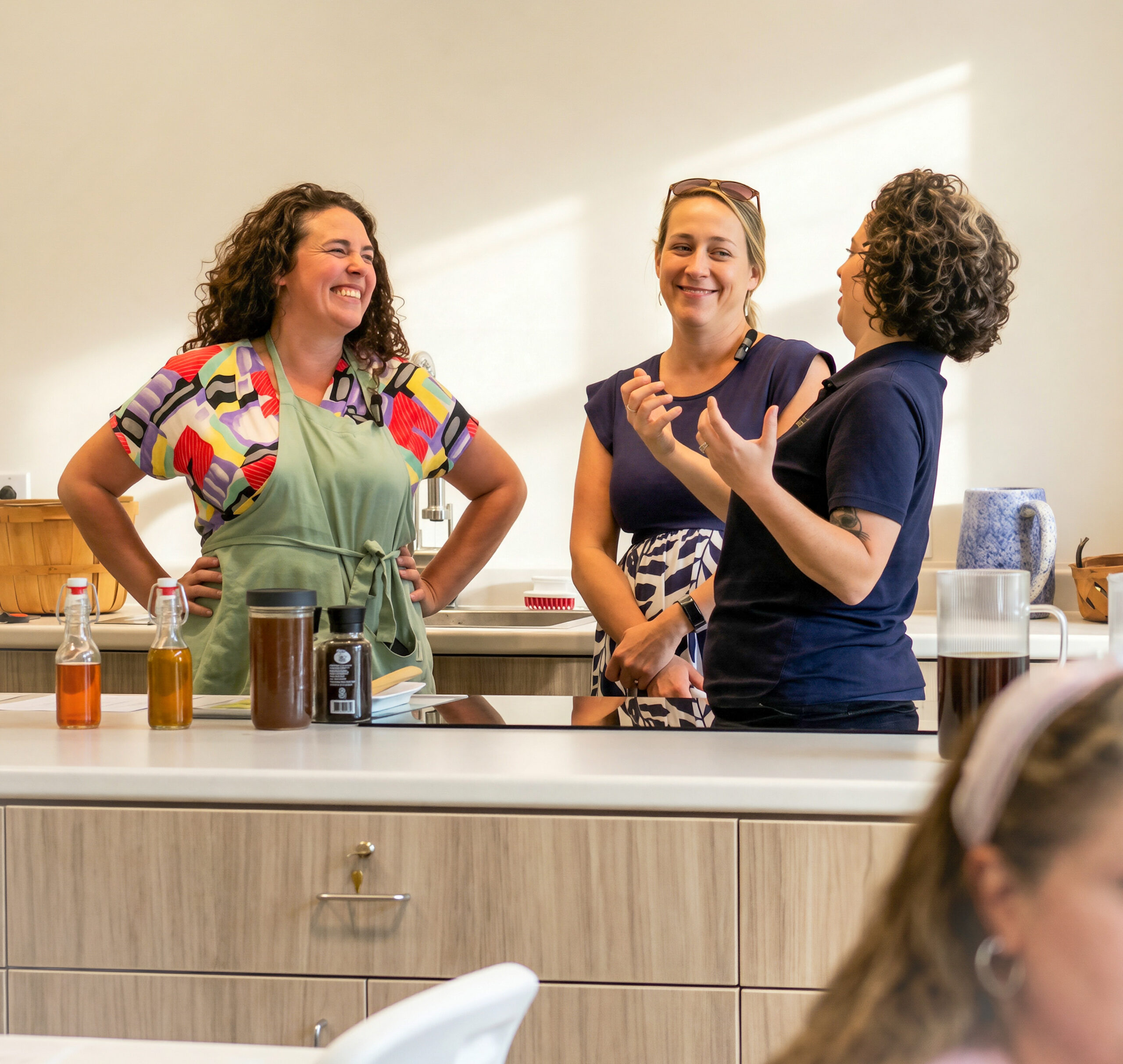
CULLMAN, Ala. – The North Alabama Agriplex last week hosted its monthly Lunch & Learn. This one was titled “Edible Flowers: Growing, Harvesting Cooking” and was led by Mae Jefferson and Taylor McHan.
The class went over some valuable points, such as safety, best practices and culinary uses and value.
The audience learned that it’s best to avoid picking flowers close to roadways due to many municipalities spraying pesticides – as well as the worry of exhaust fumes. Those looking to harvest wild flowers are encouraged to forage in fields or in forests next to waterways. Jefferson and McHan reminded the audience to always ask for permission if wandering onto property.
It’s also important to remember that if you’re picking native plants to only harvest what you need, they said; we want our native plants to be able to seed and regrow in later years. Local native flowers include violets, dandelions and wild roses.
Invasive flowers are another story, they said; feel free to take as much as you like. Invasive flowers are honeysuckle, mimosa flowers (or Persian Silk Tree) and kudzu flowers.
The best time to harvest flowers is morning, after flowers wake and dew has mostly dried. Be sure to handle them with care, as to not bruise them. Remember to tap buds gently in the field to remove tiny insects and debris. Once you’ve harvested your flowers and have taken care of them, you can use a bowl of cold water to gently swirl the delicate blossoms. Gently lift and place them on a paper towel to lightly press them dry. It’s best not to leave the petals wet.
For storing them there are a few different methods. For a short storage time, they said, you can place the petals in airtight containers and place them in the freezer for one to three days. For long-term preservation, McHan said to dehydrate your flowers in the oven on parchment paper – or if you’re fortunate enough to have a dehydrator available that would be the best options. Well-dried petals can last for about a year if stored correctly.
Jefferson told the crowd about different uses ranging from syrups, mocktails, compound butters, salads and more. McHan and Jefferson were even kind enough to take the time to prepare freshly baked bread, lavender honey butter and many jellies and syrups for the audience to try.
Those who cannot forage wildflowers themselves were encouraged to visit www.frontiercoop.com for a good many herbal needs.
Reporter’s note: After trying the honeysuckle mimosa syrup I can say that I personally have been encouraged to take a long walk in nature to appreciate all that our Earth has to offer.