











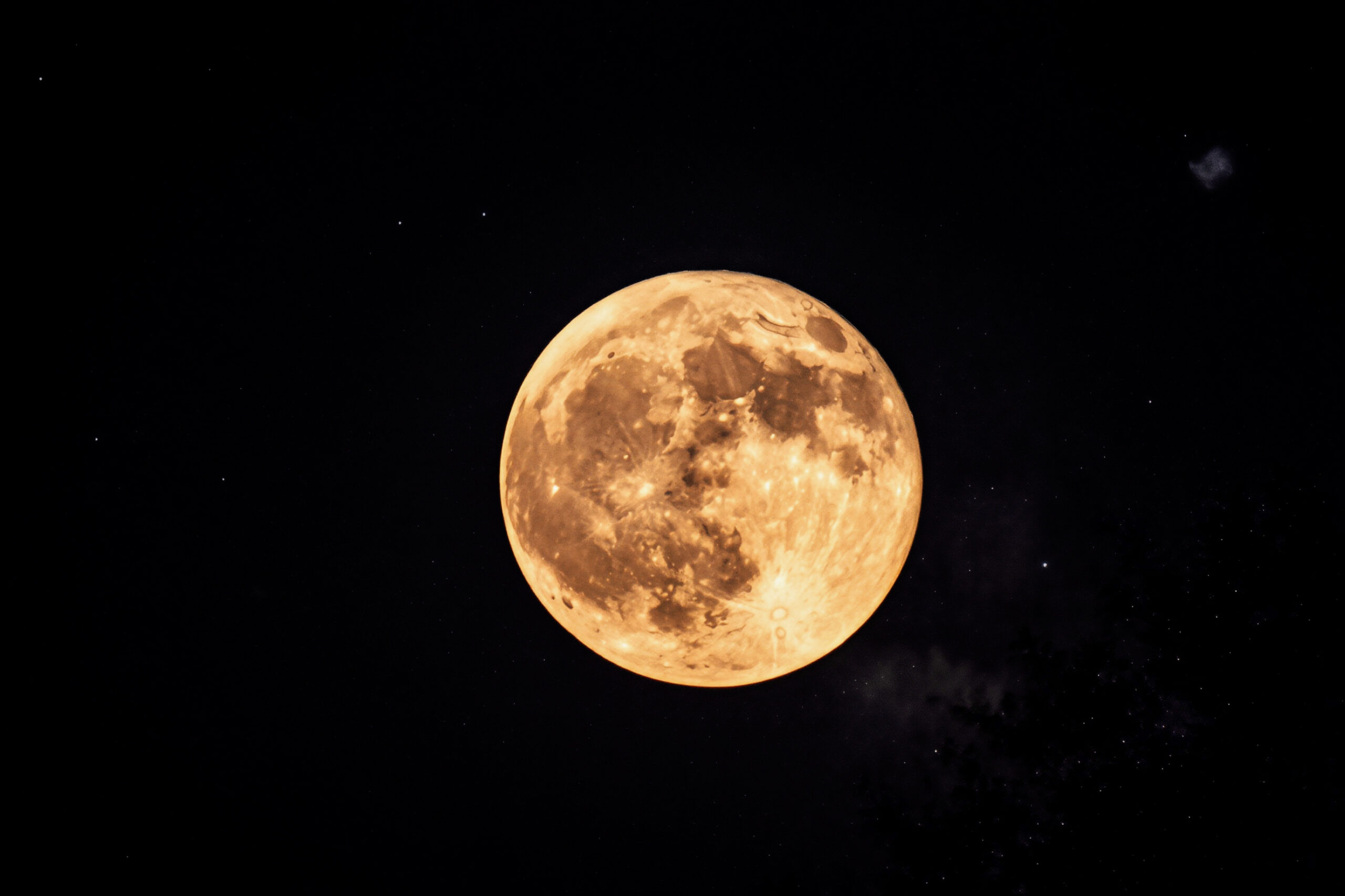
On July 29, there was the full moon, the Buck Moon – also known as: Thunder Moon, Salmon Moon and Hay Moon. The name you have probably heard the most here in Alabama is Buck Moon. This moon appears annually in July, marking the middle of summer (deep breaths guys, we’re almost in the home stretch).
Its name originates from the Algonquin tribes of North America, who noticed that in July male deer, or bucks, start to grow new antlers. These antlers are covered in fuzz and soft to the touch – highly visible and a good way for the North American tribes to mark the passing of seasons.
The other names came about in much the same way. The July full moon was also called the Thunder Moon by some tribes because of the frequent thunderstorms that roll in at this time of the year. The Hay Moon came about from Europeans due to it being the time farmers begin to harvest hay for the upcoming fall and winter months. If you’re from the Pacific Northwest, you would have heard it called the Salmon Moon, indicating when the salmon return to the rivers to spawn.
Other names are Raspberry Moon and Feather Molting Moon. The Dakota peoples’ name for the July full moon is Moon When the Chokecherries Are Ripe.
Beyond its natural markers, the Buck Moon has been used historically to track seasons, plan agricultural activities and guide hunting cycles. Many cultures also attach spiritual or symbolic meanings to this moon, celebrating it with ceremonies, festivals or reflections on growth and renewal.
The Buck Moon, like all full moons, occurs when the Earth is positioned between the sun and the moon, fully illuminating the moon’s Earth-facing side. It often appears larger and more golden when near the horizon due to the moon Illusion, and it can sometimes coincide with a supermoon, appearing slightly brighter and closer to Earth than usual. And with wildfires releasing a smoky haze in the sky this year, it scatters light, a phenomenon known as mie scattering, causing the moon to have a deep red color just on the horizon.
The next full moon will be Aug. 28, and before that the legendary Perseid meteor shower will reach its peak on the night of Aug. 12-13. This year’s viewing conditions will be excellent. The peak occurs near a New Moon so the sky will stay completely dark.