











This piece is part of a series The Tribune is featuring from Cullman High School’s student newspaper, The Highlight.
It’s kinda weird how we’re all reading this right now, right? Trends can become an excuse for a lot of things, including comments that may say, “I’m bored let’s delete our accounts” and, “It’s not that deep” that tend to have a sense of fun entwined in them. However, this is leading to a far larger issue than just humor.
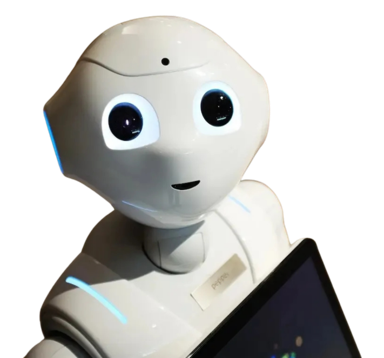
I am describing this online behavior as the “bot epidemic.” This term comes from everything online being practically copy-and-pasted from other comments to the point where they are all you see. The way in which bots interact online are more-so along the lines of spam messages and comments, like the infamous three-emoji comment. To know the way in which I am categorizing these is important to the understanding of this piece, as I mainly focus on the repetitiveness of online behavior rather than legitimate robots.
Popular comments have always been a staple in social media, but they used to all be original and fit the post they were under. Now, it seems that any possible comment can fit any post regardless of topic. According to TikTok comments, you have to check your Flo app under anything that seems different or “weird” to the general public. Online users who get emotional at a wholesome video are now seen as overreacting because others do not take emotions seriously. The Flo comments can also have a greater effect of belittling women’s emotions when they are used to make fun of the creator of a video. Women are still trying to become equals with men, and these push us back rather than contribute to progression.
Alongside the struggles of women are the implied insults hidden behind words of encouragement that can affect almost anyone. When someone might comment, “I love whatever’s wrong with you,” they are passive aggressively commenting on someone’s qualities and characteristics being endearing.
Backhanded “compliments” further contribute to forcing people into boxes and the regression of society.
The constant need to repeat what others say ends up dwindling the humor in the post or comment. For example, if someone posts a comment that gets so many likes it is the first one you see, someone is bound to post their own comment that says, “Someone commented…” and follow it with the top comment. This act completely diminishes the overall meaning and uniqueness of the original comment. This also happens with posts as well, even on other platforms. Twitter posts are copied, pasted and uploaded onto TikTok by different creators, and it receives more traction on the latter rather than the former. Even posts on TikTok are stolen and uploaded on – you guessed it – the same platform!
I feel like I should also address the actual bots: the ones that try to scam you or just spam unnecessary comments. Robots are nearly everywhere one may go on the internet, but a lot of the time interacting with bots can be avoidable, even if the endless notifications of them liking a comment of yours from two years ago is annoying.
Then, of course, there are the comments that are supposedly bots because they are “rage-baiting” other commenters. Whether it be a controversial topic under a post that directly opposes the bot comment or someone simply disagreeing with another’s basic opinion, rage-baiting is becoming a more common descriptor than ever; some instances blatantly so to the point they are put under the category of bot comments. While this may seem a bit of a harsh categorization, a lot of online users seem to use this because they, too, are tired of the endless attempts of trying to cause turmoil through disagreements. The internet is supposed to be a way to connect and learn things and is not truly meant to be an environment where everyone argues with each other all the time. Although realizing this will not prevent these interactions, it does give insight to anyone who realizes it.
Like most things, the bot epidemic has an alleged origin that can be supported – that origin is the usage of generative artificial intelligence. Modern generative AI – the AI that a lot of the population uses today – surfaced around 2020; the most popular form, ChatGPT, was released to the public in 2022. It has gained more and more popularity over the years, especially as more branches of generative AI are being created. Now, online users will comment AI stickers, post AI videos and create AI posters; basically anything a human could do with time and motivation is instead being created by using a generative program.
These types of “creations” are leaving users with unoriginal ideas, which directly correspond to the repetitive comments. The common online users are losing their autonomy of coming up with original ideas. It can be further thought out like groupthink – thoughts influenced by conforming to societal views – where everyone who comments the same ideas can be seen as sharing a single thought process. The groupthink mentality is extremely damaging to individuality due to the fact that people stop having their own opinions and agree with everything they see without deciding to view the other side. Without individuality, what is the purpose of living and being able to learn?
Overall, the bot epidemic is damaging the sense of community more than we originally thought. Comments such as, “Nope doesn’t ring a bell” and, “Stop stealing my likes” take away from the point that some people are trying to get across, especially if the latter is said by the creator of the video and the video is, in the end, a serious discussion. Contributions from generative AI have furthered this process in that they decrease creativity and influence other users to use such platforms, generally decreasing the originality that a lot of individuals used to hold.