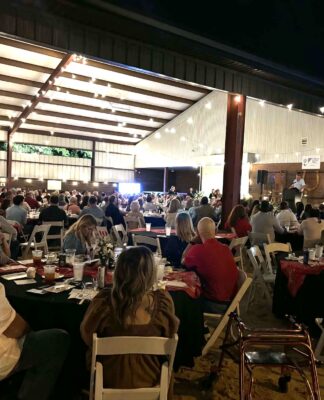






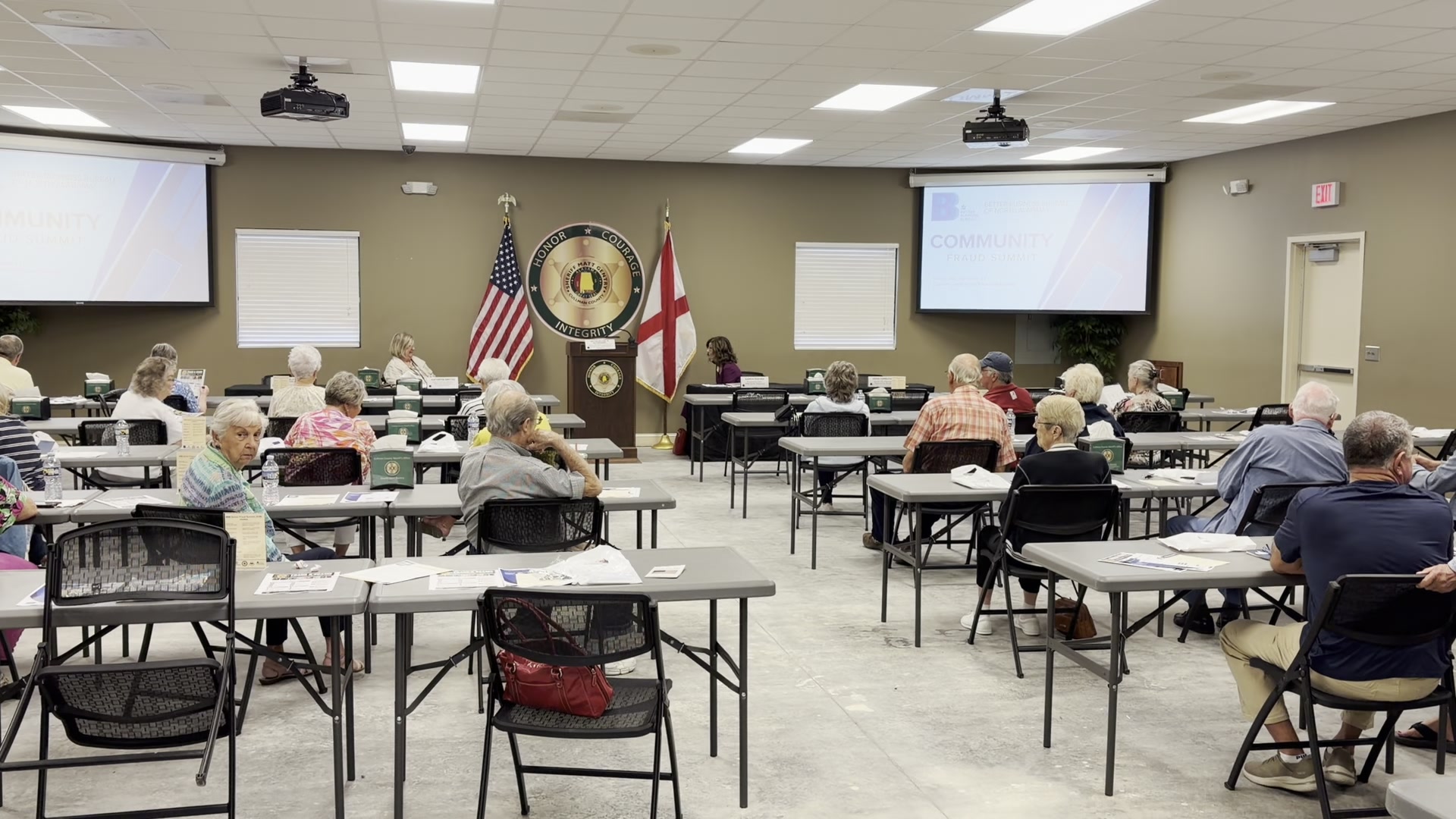
CULLMAN, Ala. – Scams are changing fast, but the warning signs are not. That was the message Wednesday, Sept. 23, as the Better Business Bureau of North Alabama hosted a Community Fraud Summit for local seniors at the Cullman County Sheriff’s Office Education Building.
“We’re here in Cullman today, and we are going to speak to a group of seniors about ways that they can protect themselves,” said Karen Reeves, president and CEO of the BBB of North Alabama.
A panel of speakers from the Alabama Securities Commission, Premier Bank of Cullman and the Cullman County Sheriff’s Office shared tips on how to recognize fraud and what to do when it happens.
Older adults at higher risk
According to the BBB’s 2025 Scam Tracker Risk Report, which was distributed at the summit, adults age 55 and older submitted 36.9% of the reports published on BBB Scam Tracker last year.
People 65 and older reported the highest susceptibility of any age group. Of those in that group who reported being targeted by a scam, 43.2% said they lost money, compared with 39.8% of all consumers. Their median reported loss was $100, compared with $93 for all consumers.
The report ranked investment and cryptocurrency scams as the riskiest type for both adults 55-64 and those 65 and older. For the older group, romance and friendship scams ranked second and online purchase scams third.
The BBB also found older adults were more likely than other age groups to lose money when targeted through online classifieds and internet messaging, and more likely to report losing money through prepaid or gift cards and checks.
What scams look like now
The Cullman County Sheriff’s Office, represented by Sheriff-elect Chad Whaley, listed the scams investigators are seeing today, including:
- imposter scams
- AI voice and “deepfake” scams that mimic the voices of loved ones
- fake bank and security alerts
- package-delivery phishing texts
- cryptocurrency and investment schemes
- job and task scams
- people impersonating government agencies or law enforcement
- romance and family-emergency scams
A handout cited Federal Trade Commission figures showing $3.5 billion in losses to imposter scams in 2025. It also cited FBI figures of nearly 61,000 law enforcement and government impersonation complaints, with more than $1.6 billion in losses from January 2025 through July 2026.
The Sheriff’s Office warned that scams now arrive by mail, computer, phone, TV and radio, and in person.
Red flags and what to do
The Sheriff’s Office listed five red flags:
- pressure to act now
- requests for gift cards, cryptocurrency, cash or other unusual payments
- unexpected links or login requests
- callers who claim to be law enforcement or a government agency
- requests for personal or banking information
If something seems wrong, the Sheriff’s Office advises people to:
- stop and verify the request independently
- not click on links
- hang up
- contact their bank right away if money was sent
- report suspected fraud to law enforcement
An FTC handout on unwanted calls reminded attendees that recorded sales calls are illegal unless a person has given a business written permission. Numbers on the national Do Not Call Registry should not receive sales calls at all. Because scammers can fake caller ID to look like the IRS, a familiar business, a neighbor or even the person’s own number, the FTC advises people to hang up without pressing any numbers and to ask their phone carrier about call-blocking options. More information is available at https://consumer.ftc.gov/features/how-stop-unwanted-calls.
The FTC also asks people to pass the information along, saying some people may know what to do about unwanted calls, but chances are they know someone who doesn’t.
As the Sheriff’s Office handout put it: “Scams change. The warning signs don’t.”