Milkweed may have “weed” in the name, but it is an essential native wildflower. It can commonly be mistaken for a weed because it grows among them along roads, in pastures or fields. As we near spring and the time for grass to be cut, consider sparing this friend of our ecosystem.
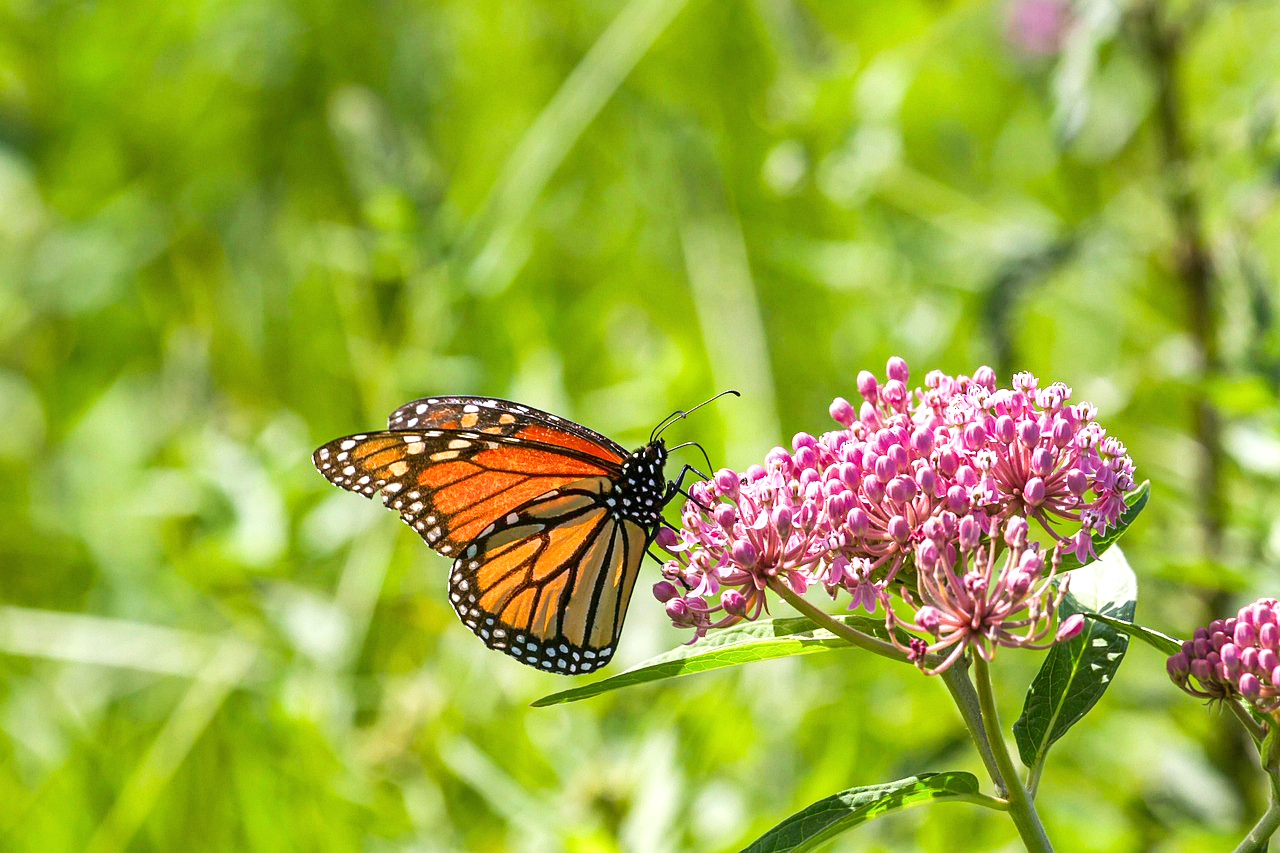
Monarch butterflies typically come out of hibernation during February, laying eggs March to April. After four days these eggs hatch into larvae! Though, do you know where they lay their eggs? If you guessed milkweed, you’d be correct! Monarchs lay their eggs on milkweed so when the larvae, or caterpillars, hatch they can eat the flower to grow!
After two weeks the caterpillar will fully mature and attach itself to a leaf or stem of the milkweed. It forms a chrysalis around itself to experience metamorphosis for 10 days before becoming a butterfly! A Monarch appears that is just as beautiful as the milkweed that aided its arrival.
The importance of milkweed doesn’t stop there! Orioles and Goldfinches use milkweed for their nests! While Goldfinches use the silky, white hairs attached to seeds in their nests for insulation, Orioles use the milkweed fiber to weave their nests. Milkweeds also invite ladybugs! They help gardeners by eating common threats such as mites. These garden pests suck out chlorophyll from plants causing yellow white, or brown spots on leaves.
This spring, be mindful of the sanctuary that nature has set in place to protect the order of things despite us!