








CULLMAN, Ala. – The Cullman City Council has adopted a new ordinance designed to reshape how the city plans, funds and executes street and transportation infrastructure projects, tying long-term planning directly to the budgeting process.
The measure formally establishes an annual Street and Transportation Infrastructure Capital Improvement Plan and pairs it with a comprehensive infrastructure assessment through First Step Pavement Management.
City Council President Kim Hall said the ordinance was driven by the need for a more structured and transparent approach to one of the city’s largest long-term investments.
“This ordinance was introduced to strengthen how the city plans, prioritizes and communicates infrastructure investments,” Hall said. “Street and transportation infrastructure represent some of the city’s most significant long-term assets and financial commitments. This policy creates a structured, transparent and data-informed process to ensure those investments are aligned with community needs and long-term planning goals.”
Previously, paving decisions were handled through a traditional budgeting process without a formally adopted long-range infrastructure plan. Under the new ordinance, the council must review and approve the infrastructure plan before any paving projects can be included in the city’s budget, formally linking planning, funding and execution.
“This ordinance officially establishes a connection between planning, budgeting and project execution,” Hall said.
City officials said the change moves Cullman away from a reactive paving model and toward a long-range, data-driven strategy.
“This ensures that projects are evaluated using objective criteria, prioritized strategically, supported by identified funding sources and reviewed publicly before funding decisions are made,” Hall said. “It represents a proactive, strategic, long-range planning model.”
The ordinance will take effect as the city develops its next budget cycle and annual infrastructure plan, introducing a more consistent framework for future paving decisions.
For residents, the change is expected to provide more visibility into which roads are prioritized and when improvements are planned, while reducing uncertainty around how paving decisions are made.
The ordinance also strengthens how infrastructure spending is tracked and reported, requiring regular updates to the council.
“The Street Department will provide quarterly reports to the council that may include project status updates, expenditures to date, budget variances, delays or change orders and updated timelines,” Hall said. “This ensures consistent oversight, improves internal accountability and enhances public transparency.”
As part of the rollout, the city approved an agreement with First Step Pavement Management not to exceed $79,500 for a full infrastructure assessment.
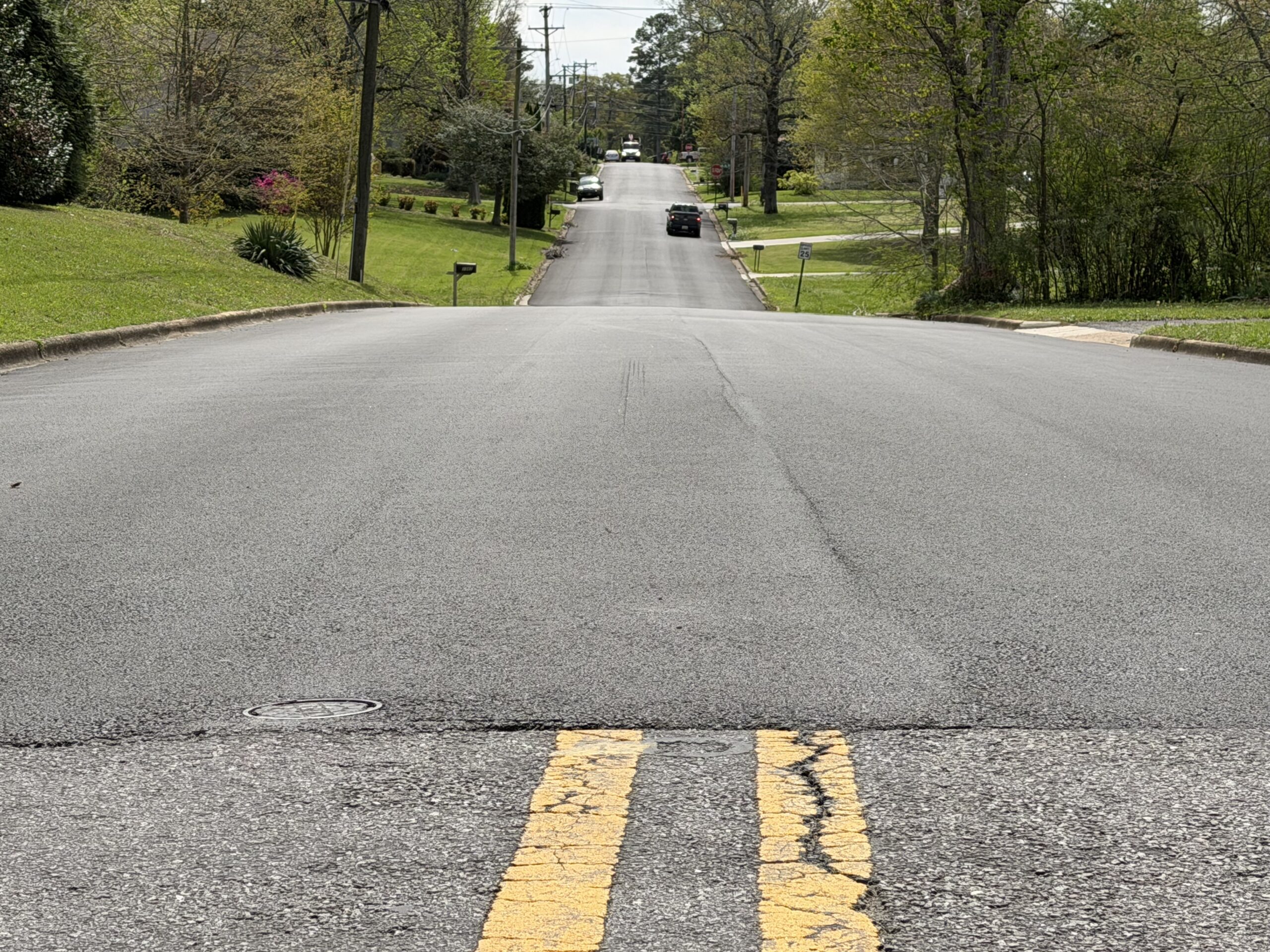
The work includes a street inventory and condition assessment, as well as inventories of sidewalks, curbs and gutters, striping and signage.
The assessment will serve as a baseline dataset used to guide future paving and infrastructure decisions under the new ordinance.
“These services provide the city with detailed, data-driven insights into infrastructure conditions,” Hall said.
The ordinance requires detailed cost estimates and funding plans for each project, including engineering, materials, construction and contingency expenses, along with identified funding sources such as gas tax revenues, Rebuild Alabama funds, grants and general fund allocations.
“This approach provides an outline for financial forecasting, supports responsible use of taxpayer dollars and positions the city to compete for state and federal funding opportunities,” Hall said.
If project costs change after adoption, the ordinance allows for formal amendments, requiring updated cost breakdowns and council approval. Emergency work can proceed under the mayor’s direction, with council ratification required at the next meeting.
City leaders said the ordinance introduces new transparency measures, including public posting of the infrastructure plan and updates through official city communication channels.
“The plan will be posted publicly and available on the city’s website,” Hall said. “Summaries and updates will be shared through city communication channels.”
Hall said the long-term goal is to ensure infrastructure decisions are guided by data, priorities and accountability.
“By combining data-driven condition assessments, multiyear planning and clearly identified funding strategies, the city will be equipped to prioritize high-impact projects, maintain infrastructure efficiently, compete for state and federal grants and maximize the value of every dollar invested,” she said.
While the ordinance does not directly dictate how quickly paving projects move forward, Hall said it is expected to improve coordination and long-term impact.
“Over time, this structured approach can lead to more strategic and impactful infrastructure investments,” she said.