CULLMAN, Ala. – As Alabama’s medical cannabis program continues its phased rollout, questions remain for patients, caregivers and the general public about how the new law affects public safety and law enforcement at the local level.
Cullman Police Chief Joey Duncan said the Cullman Police Department has been preparing officers through training and coordination with State guidance to ensure the law is enforced fairly and professionally.
Alabama’s medical cannabis program is regulated at the state level by the Alabama Medical Cannabis Commission, which oversees patient registration, product standards, approved forms of medical cannabis and licensing.
While the regulatory framework is set by the State, enforcement of criminal and traffic laws remains the responsibility of local law enforcement agencies.
“Our officers are receiving training on Alabama’s medical cannabis laws,” Duncan said. “This includes understanding approved forms of medical cannabis, legal possession limits and the documentation required for lawful use. The goal is to ensure officers can identify legal medical use while continuing to enforce the law fairly and professionally.”
Carrying medical cannabis within city limits
Duncan said patients and registered caregivers should be prepared to provide documentation if they are in possession of medical cannabis.
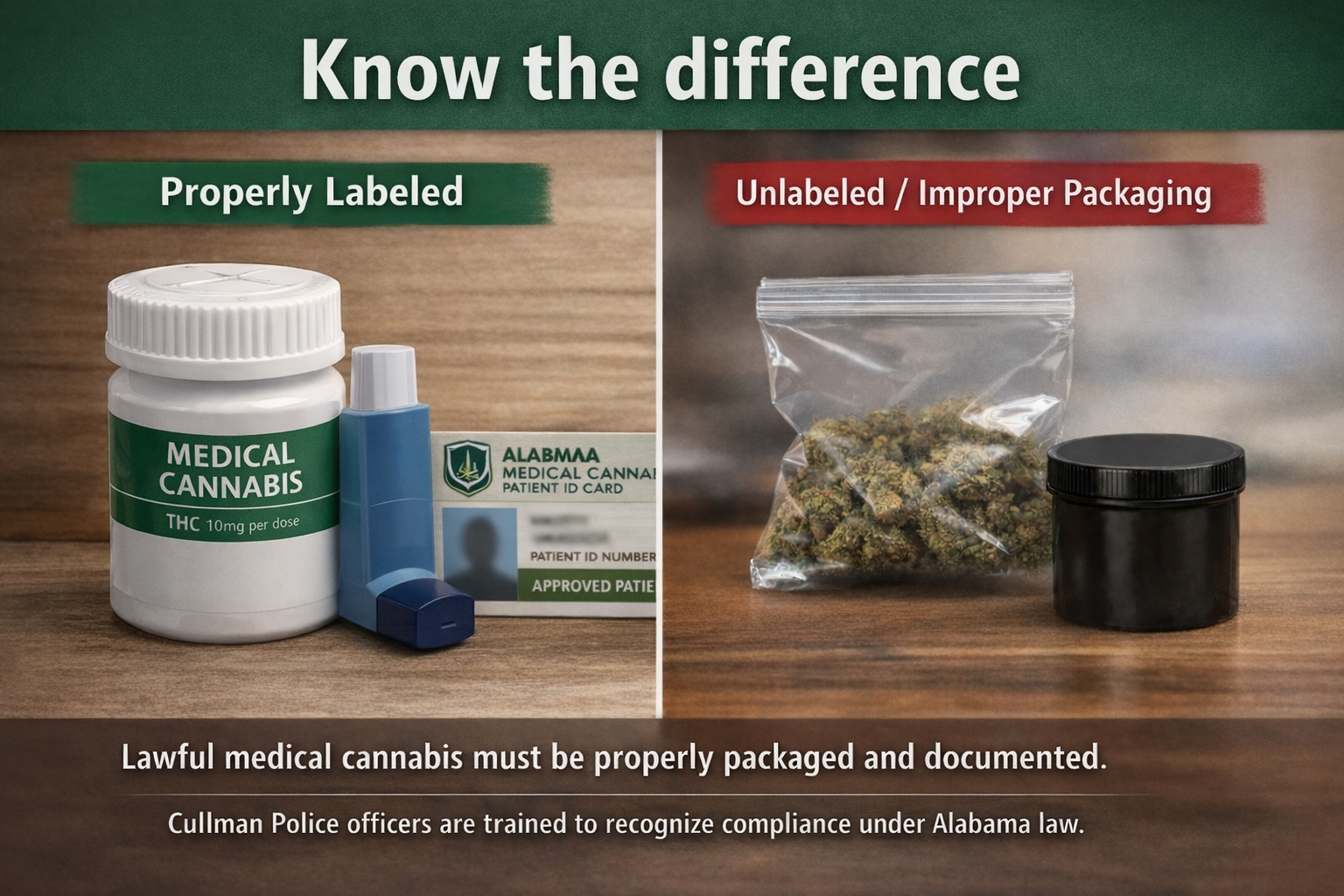
“Patients and registered caregivers should always carry a valid medical cannabis card and keep their medication in the original packaging approved by the Alabama Medical Cannabis Commission,” he said.
State law requires that medical cannabis products remain in approved packaging with proper labeling, allowing officers to quickly determine whether possession complies with state regulations.
Impaired driving laws remain unchanged
Duncan emphasized that medical cannabis authorization does not change how officers address impaired driving or public safety concerns.
“No. Driving while impaired remains illegal and is a serious safety concern,” Duncan said. “Officers will continue to investigate impairment using observed behavior, standardized field sobriety tests and other established procedures. Authorization to use medical cannabis does not allow driving under the influence.”
Officers will continue to rely on established enforcement methods regardless of whether impairment is suspected to involve alcohol, medical cannabis or another substance.
Importance of labeling and documentation
Duncan said proper labeling and documentation are critical for both patients and law enforcement.
“Proper labeling and documentation are critical for officers to quickly determine whether possession is legal under state law,” he said. “Products without proper labeling or situations where documentation cannot be provided may require further investigation or enforcement action.”
Medical cannabis products that do not meet state requirements, or situations where documentation cannot be produced, may lead to additional enforcement steps under existing law.
Ongoing preparation and officer familiarity
Duncan said preparation for medical cannabis enforcement is ongoing and will continue as Alabama’s program moves closer to full operation.
While officers are being trained on current law and regulatory requirements, he noted that additional hands-on familiarity will be important once dispensaries are actively operating.
As part of that effort, Duncan said the department plans to follow up with Joey Robertson, owner of Wagon Trail Hemp Farms, once dispensaries are open.
“I will also follow up with Joey once the dispensaries begin operating so our officers can familiarize themselves with lawful packaging, medical cannabis cards and other key points,” Duncan said.
Duncan emphasized that those follow-up efforts are intended to help officers quickly distinguish lawful medical use from situations that may require further investigation, while ensuring patients and caregivers are treated fairly and professionally under state law.
Public education and community awareness
Beyond enforcement, Duncan said public education remains an important role for the department as the program develops.
“The Cullman Police Department works with state agencies, health care providers and community partners to share accurate information about medical cannabis laws,” he said. “Our goal is to help citizens understand the law, avoid unintentional violations and ensure medical cannabis is used safely and responsibly.”
State officials have acknowledged that Alabama’s medical cannabis rollout has experienced delays related to licensing and ongoing administrative and legal processes.
Local law enforcement agencies, including the Cullman Police Department, are preparing based on current law and regulatory guidance, with the understanding that additional clarity may come as the program continues to take shape.