CULLMAN, Ala. – Cullman City Schools brought some fall-time flair to the STEM (Science, Technology, Engineering and Mathematics) curriculum this month — just in time for Halloween.
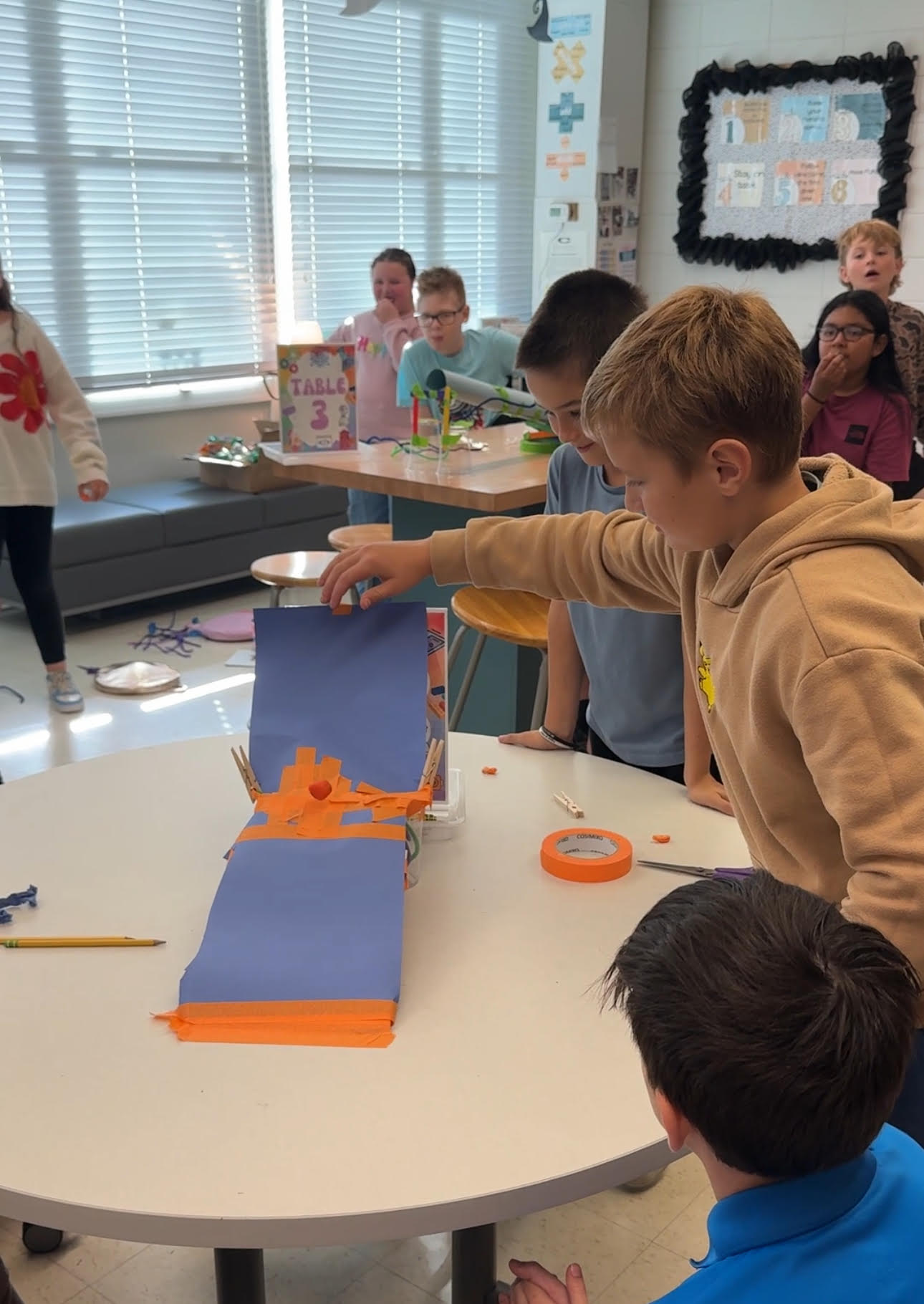
As part of the recent runaway pumpkin STEM challenge at West Elementary School, students built elaborate ramps and courses using engineering skills to see which mini-pumpkin could roll the farthest to win. Using only a limited set of materials, students had to plan, test and adjust their designs while learning about force, motion and the importance of ramps in engineering.
“The learning goal of the Runaway Pumpkin Challenge was for students to understand how ramps affect motion and speed while applying the engineering design process to solve a problem,” East and West Elementary STEM teacher Jennifer Tidwell explained. “Through hands-on experimentation, students explored concepts such as force, gravity, friction, and angles, discovering how these factors influence how far an object can roll. The activity encouraged creativity, problem-solving and teamwork as students designed and tested their ramps to achieve the best results.”
As part of the project, students learned about physics in motion by designing and testing their ramps; engineering design process by planning and testing; problem-solving and critical thinking to figure out how to make their pumpkin go the distance; measurement and data collection to evaluate their results; teamwork and communication to work with classmates to execute their plan; and creativity and innovation to map out angles and material concepts.
“This lesson connects to real life by showing students how ramps are used to make movement easier and more efficient in the world around them. Engineers design ramps to help people and objects move safely and smoothly — from wheelchair ramps that make buildings accessible, to highway ramps that help cars merge safely, to slides, skate parks, and delivery systems,” Tidwell noted. “By experimenting with angles, surfaces and materials, students learn how these same principles of force and motion are applied in real-world engineering to improve accessibility, transportation and everyday convenience. My mother was in a wheelchair her entire life due to Muscular Dystrophy. She passed in August, so this lesson meant a lot to me and how important ramps are!”