










This feature originally ran in our Community Matters magazine.
In Cullman, German food is more than a meal.
It connects today’s families to the people who settled this community, the traditions they carried with them and the recipes preserved around kitchen tables for generations.
Some recipes were written carefully on index cards. Others were prepared from memory and taught by watching a mother, father, grandmother, grandfather or neighbor at work in the kitchen.
Measurements became more precise. Ingredients changed according to what was available. Families added their own touches. Still, the purpose remained the same: preparing something nourishing and bringing people together.
German cooking is often described as hearty, but its character comes from balance.
Vinegar brightens warm potatoes and slow-cooked cabbage. Apples bring sweetness to savory dishes. Mustard adds sharpness to sausage and roasted meats. Flour, eggs, butter, potatoes and onions become comforting dishes through technique, patience and tradition.
“From Cullman’s German Kitchens” celebrates familiar Oktoberfest flavors through recipes adapted for today’s home kitchen.
From golden schnitzel and handmade spätzle to warm potato salad, Bavarian-style pretzels and buttery German cake, these are foods meant to be prepared patiently, served generously and shared.
Willkommen.
Pull up a chair and enjoy a taste of German tradition.
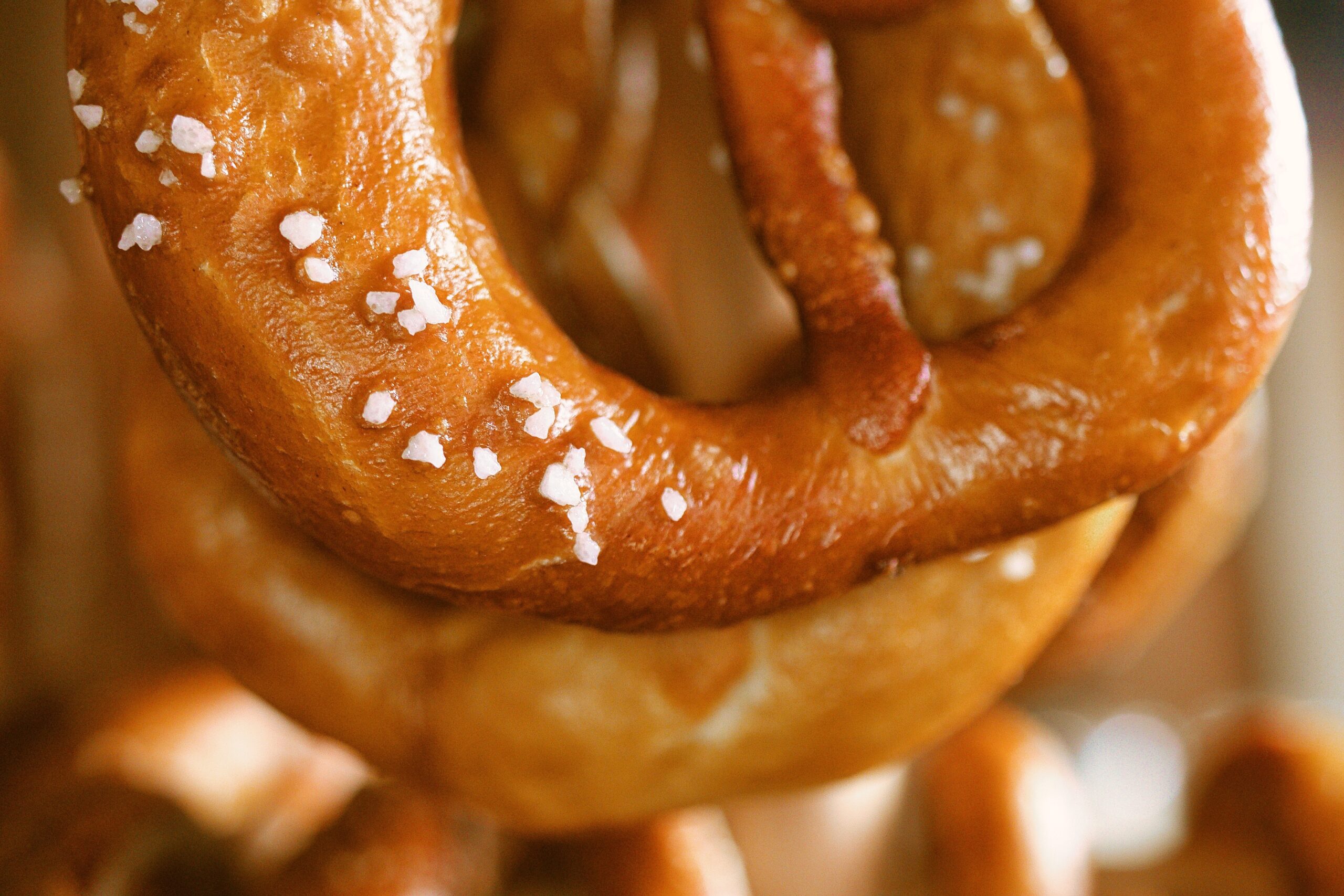
Bavarian-style soft pretzels — Brezeln
Makes: 8 large pretzels
Preparation time: 30 minutes
Rising time: Approximately 90 minutes
Baking time: 14-18 minutes
With their dark golden crusts, soft centers and sprinkling of coarse salt, pretzels are among the foods most closely associated with Bavaria.
Fresh pretzels may be served with sweet mustard, cheese spread, butter or alongside bratwurst and sauerkraut.
Ingredients
- 1 1/2 cups warm water, approximately 105-110 degrees
- 1 Tbsp. light brown sugar
- 2 1/4 tsp. active dry yeast
- 4 1/4 cups all-purpose flour, plus more as needed
- 2 tsp. fine salt
- 4 Tbsp. unsalted butter, melted and cooled slightly
- 10 cups water
- 2/3 cup baking soda
- 1 large egg yolk
- 1 Tbsp. water
- Coarse salt, for topping
Directions
- Combine the warm water and brown sugar in a large mixing bowl.
- Sprinkle the yeast over the water. Allow the mixture to stand for five to 10 minutes, or until foamy.
- Add the flour, fine salt and melted butter. Stir until a rough dough forms.
- Turn the dough onto a lightly floured surface. Knead for approximately eight minutes, or until smooth and elastic.
- Add additional flour 1 tablespoon at a time only if the dough remains excessively sticky.
- Place the dough in a lightly greased bowl. Cover it and allow it to rise in a warm location for approximately one hour, or until doubled in size.
- Heat the oven to 425 degrees.
- Line two large baking sheets with parchment paper. Lightly grease the parchment.
- Turn the dough onto a clean work surface and divide it into eight equal portions.
- Roll each portion into a rope approximately 24 inches long.
- Form the rope into a wide U shape. Cross the ends twice, then fold the ends downward. Press them gently onto the bottom curve to form the traditional pretzel shape.
- Bring 10 cups of water to a gentle boil in a wide pot.
- Carefully add the baking soda. The water may foam briefly.
- Using a large, slotted spoon, lower each pretzel into the simmering solution for 20-30 seconds.
- Remove the pretzel, allow the excess water to drain and place it on the prepared baking sheet.
- Whisk the egg yolk with 1 tablespoon of water.
- Brush the mixture lightly over each pretzel. Sprinkle with coarse salt.
- Bake for 14-18 minutes, or until the pretzels are a deep golden brown.
- Transfer the pretzels to a wire rack. Allow them to cool for at least five minutes before serving.
German kitchen note
Traditional Bavarian pretzels are dipped in a food-grade lye solution, which gives them their distinctive dark crust. A baking soda solution offers home cooks a more approachable alternative.
Serving suggestion
Serve warm with German-style sweet mustard, cheese spread or butter.
Traditional breaded pork schnitzel — Schweineschnitzel
Serves: 4
Preparation time: 25 minutes
Cooking time: Approximately 15 minutes
Crisp on the outside and tender inside, schnitzel is one of the most recognizable dishes associated with German-speaking Europe.
Traditional Wiener schnitzel is prepared with veal. Pork schnitzel is widely enjoyed in Germany and provides an affordable option for the family table.
Ingredients
- 4 boneless pork loin chops, approximately 5-6 ounces each
- 1 tsp. salt
- 1/2 tsp. freshly ground black pepper
- 1/2 cup all-purpose flour
- 2 large eggs
- 2 Tbsp. milk
- 1 1/2 cups fine, plain breadcrumbs
- Vegetable oil, canola oil or clarified butter, for frying
- 1 lemon, cut into wedges
- Chopped fresh parsley, if desired
Directions
- Place one pork chop between two sheets of plastic wrap or parchment paper.
- Using the flat side of a meat mallet, pound the pork gently until it is approximately 1/4-inch thick.
- Repeat with the remaining pork chops.
- Pat the pork dry. Season both sides with salt and pepper.
- Place the flour in a shallow dish.
- Whisk the eggs and milk together in a second shallow dish.
- Place the breadcrumbs in a third shallow dish.
- Coat each pork cutlet lightly in flour. Shake away the excess.
- Dip the cutlet into the egg mixture and allow the excess egg to drip away.
- Coat both sides with breadcrumbs.
- Do not press the breadcrumbs firmly into the meat. A light coating helps create a crisp crust that separates slightly from the meat during frying.
- Pour enough oil into a large skillet to reach a depth of approximately 1/4 inch.
- Heat the oil over medium-high heat.
- Working in batches, place the breaded cutlets carefully into the hot oil.
- Cook for approximately two to three minutes on each side, or until golden brown.
- Check the pork with a food thermometer. It should reach an internal temperature of 145 degrees.
- Allow the schnitzel to rest for at least three minutes before serving.
- Do not overcrowd the skillet. Add additional oil between batches if needed.
- Transfer the schnitzel to a wire rack or paper towel-lined plate.
- Serve immediately with lemon wedges and parsley.
German kitchen note
Bread the schnitzel immediately before frying. Allowing the coating to rest for too long may cause it to become heavy or soggy.
Serving suggestion
Serve with warm German potato salad, spätzle, braised red cabbage or cucumber salad.
German marinated pot roast — Sauerbraten
Serves: 6-8
Preparation time: 30 minutes
Marinating time: 2-3 days
Cooking time: Approximately 3 hours
Sauerbraten translates to “sour roast.”
The traditional dish develops its distinctive sweet-and-sour character by marinating beef with vinegar, vegetables and warm spices before slowly braising it until tender.
Regional recipes differ. Some use wine, buttermilk or raisins. Others thicken the gravy with gingerbread or crushed gingersnap cookies.
This version uses ingredients readily available to modern home cooks while preserving the dish’s savory, tart and slightly sweet flavor.
Ingredients
For the marinade
- 1 beef chuck roast, approximately 3 1/2-4 pounds
- 2 cups dry red wine or additional beef broth
- 1 1/2 cups red wine vinegar
- 1 1/2 cups beef broth
- 1 large yellow onion, sliced
- 2 carrots, sliced
- 2 celery ribs, sliced
- 3 garlic cloves, lightly crushed
- 2 bay leaves
- 8 whole black peppercorns
- 6 whole cloves
- 6 juniper berries, lightly crushed, optional
- 1 tsp. mustard seeds
For the roast and gravy
- 1 1/2 tsp. salt
- 1/2 tsp. freshly ground black pepper
- 2 Tbsp. vegetable oil
- 2 Tbsp. tomato paste
- 2 Tbsp. brown sugar
- 10-12 gingersnap cookies, finely crushed
- Additional salt, pepper, vinegar or brown sugar, as needed
Directions
- Place the beef roast in a large glass, ceramic or food-safe nonreactive container.
- Combine the wine, vinegar, broth, onion, carrots, celery, garlic, bay leaves, peppercorns, cloves, juniper berries and mustard seeds in a large saucepan.
- Bring the mixture to a gentle boil.
- Reduce the heat and simmer for approximately five minutes.
- Remove the marinade from the heat. Allow it to cool completely.
- Pour the cooled marinade and vegetables over the roast.
- Cover and refrigerate for two to three days. Turn the roast once or twice each day.
- When ready to cook, heat the oven to 325 degrees.
- Remove the roast from the marinade and pat it thoroughly dry.
- Strain the marinade. Reserve both the liquid and vegetables.
- Season the roast with salt and pepper.
- Heat the oil in a large Dutch oven over medium-high heat.
- Brown the roast for approximately three to four minutes on each side.
- Transfer the roast temporarily to a plate.
- Add the reserved vegetables to the Dutch oven. Cook for approximately five minutes.
- Stir in the tomato paste and brown sugar. Cook for one minute.
- Return the roast to the Dutch oven.
- Add enough reserved marinade to reach approximately halfway up the sides of the meat.
- Bring the liquid to a gentle simmer.
- Cover the Dutch oven and transfer it to the oven.
- Cook for approximately 2 1/2-3 hours. Turn the roast halfway through cooking.
- Check the meat for tenderness. It is ready when it can be easily pierced with a fork.
- Transfer the roast to a cutting board and cover it loosely.
- Strain approximately 3 cups of the cooking liquid into a saucepan. Discard the cooked vegetables and whole spices.
- Bring the liquid to a gentle simmer.
- Whisk in the crushed gingersnap cookies a small amount at a time until the gravy reaches the desired thickness.
- Taste the gravy.
- Add a small amount of brown sugar if it is too tart. Add vinegar if it needs additional brightness. Season with salt and pepper as needed.
- Slice the roast across the grain.
- Serve with the warm gravy.
German kitchen note
Sauerbraten should taste balanced rather than sharply sour. Vinegar provides brightness, while brown sugar and gingersnaps soften the acidity and add depth.
Food safety note
Keep the roast refrigerated throughout the marinating process. Because the marinade has been in contact with raw meat, it must be fully cooked before it is used in the finished gravy.
Bratwurst with apples, onions and sauerkraut — Bratwurst mit Äpfeln, Zwiebeln und Sauerkraut
Serves: 6
Preparation time: 15 minutes
Cooking time: Approximately 35 minutes
Bratwurst and sauerkraut are familiar favorites during Cullman’s Oktoberfest season.
Apples and onions soften the sharpness of the sauerkraut and create a savory dish with gentle sweetness.
Ingredients
- 6 uncooked bratwurst links
- 1 Tbsp. vegetable oil or butter
- 1 large yellow onion, thinly sliced
- 2 medium firm apples, cored and thinly sliced
- 2 garlic cloves, minced
- 1 24-ounce jar sauerkraut, drained
- 1 cup apple cider or unsweetened apple juice
- 1 Tbsp. German-style or Dijon mustard
- 1 tsp. caraway seeds, optional
- 1/2 tsp. freshly ground black pepper
- Salt, if needed
- Chopped fresh parsley, optional
Directions
- Heat the oil in a large skillet or Dutch oven over medium heat.
- Add the bratwurst and brown for approximately two to three minutes on each side.
- The sausages do not need to be completely cooked at this stage.
- Transfer the bratwurst to a plate.
- Add the onion to the skillet. Cook for approximately five minutes, or until softened.
- Add the apple slices. Cook for an additional three minutes.
- Stir in the garlic. Cook for approximately 30 seconds.
- Add the sauerkraut, apple cider, mustard, caraway seeds and black pepper.
- Stir gently to combine.
- Nestle the browned bratwurst into the sauerkraut mixture.
- Bring the liquid to a gentle simmer.
- Cover and reduce the heat to medium-low.
- Cook for approximately 20 minutes. Turn the bratwurst once during cooking.
- Check the bratwurst with a food thermometer. Each link should reach an internal temperature of 160 degrees.
- Remove the lid during the final five minutes if excess liquid remains.
- Taste the sauerkraut. Add salt only if needed.
- Sprinkle with parsley and serve warm.
German kitchen note
Caraway seeds have a warm, earthy flavor commonly associated with rye bread and cabbage dishes. They are traditional in many sauerkraut preparations but may be omitted.
Serving suggestion
Serve with warm pretzels, sweet mustard, German potato salad or mashed potatoes.
Homemade German egg noodles — Spätzle
Serves: 6
Preparation time: 15 minutes
Resting time: 10 minutes
Cooking time: Approximately 15 minutes
Spätzle are small, tender egg noodles enjoyed throughout southern Germany and neighboring regions.
Their name is often translated as “little sparrows,” a reference to the appearance of older hand-cut versions.
A spätzle maker creates the familiar small noodles, but a colander with large holes or a sturdy cutting board may also be used.
Ingredients
- 2 cups all-purpose flour
- 1 tsp. salt
- 1/4 tsp. ground nutmeg
- 4 large eggs
- 1/2 cup whole milk, plus more if needed
- 3 Tbsp. unsalted butter
- 2 Tbsp. chopped fresh parsley, optional
- Salt and freshly ground black pepper, to taste
Directions
- Bring a large pot of well-salted water to a gentle boil.
- Whisk together the flour, salt and nutmeg in a large bowl.
- Whisk the eggs and milk together in a separate bowl.
- Pour the egg mixture into the flour mixture.
- Using a sturdy wooden spoon, beat the dough vigorously for approximately three to five minutes.
- The dough should become smooth, elastic and thick. It should remain loose enough to fall slowly from the spoon.
- Allow the dough to rest for approximately 10 minutes.
- Working in small batches, press the dough through a spätzle maker or colander with large holes directly into the gently boiling water.
- As an alternative, spread a small portion of dough thinly along the edge of a damp cutting board. Use a knife to cut narrow strips of dough directly into the water.
- Stir gently to prevent the noodles from sticking together.
- Cook until the spätzle rise to the surface.
- Continue cooking for approximately one additional minute.
- Remove the noodles with a slotted spoon and transfer them to a bowl.
- Repeat until all the dough has been cooked.
- Melt the butter in a large skillet over medium heat.
- Add the cooked spätzle.
- Toss gently for approximately three to five minutes, or until heated through and lightly golden in places.
- Season with salt and pepper.
- Add parsley, if desired, and serve warm.
German kitchen note
The dough should be wetter and more elastic than ordinary pasta dough. If it is too thick to pass through the spätzle maker, add milk 1 tablespoon at a time.
Käsespätzle variation
- Place warm spätzle in a baking dish in alternating layers with shredded Emmental, Gruyère or Swiss cheese.
- Top with deeply browned onions.
- Bake at 375 degrees until the cheese has melted and the dish is hot throughout.
Warm German potato salad — Warmer Kartoffelsalat
Serves: 6
Preparation time: 20 minutes
Cooking time: Approximately 30 minutes
Unlike many American potato salads, this traditional German-style version contains no mayonnaise.
Warm potatoes absorb a tangy dressing made with bacon, onion, vinegar and broth. The finished salad is savory, slightly sweet and pleasantly tart.
Ingredients
- 2 1/2 pounds Yukon Gold or other waxy potatoes
- 6 slices thick-cut bacon, diced
- 1 medium yellow onion, finely chopped
- 1/2 cup chicken or vegetable broth
- 1/3 cup apple cider vinegar
- 1 Tbsp. Dijon or German-style mustard
- 1 Tbsp. granulated sugar
- 3/4 tsp. salt, plus more for the cooking water
- 1/4 tsp. freshly ground black pepper
- 2 Tbsp. chopped fresh parsley
Directions
- Place the potatoes in a large pot.
- Cover them with cold water by approximately 1 inch.
- Season the water generously with salt.
- Bring the water to a boil.
- Reduce the heat and simmer until the potatoes are tender when pierced with a knife, approximately 15-20 minutes.
- Do not overcook the potatoes.
- Drain the potatoes. Allow them to cool just enough to handle.
- Peel the potatoes, if desired.
- Cut them into slices approximately 1/4-inch thick.
- Place the warm potatoes in a large heat-safe bowl.
- Cook the bacon in a large skillet over medium heat until crisp.
- Transfer the bacon to a plate with a slotted spoon.
- Leave approximately 2 tablespoons of bacon drippings in the skillet.
- Add the onion. Cook for approximately three to four minutes, or until softened.
- Carefully add the broth, vinegar, mustard, sugar, salt and pepper.
- Bring the dressing to a gentle simmer. Stir until the sugar has dissolved.
- Pour the hot dressing over the warm potatoes.
- Add the cooked bacon.
- Fold the ingredients together gently so the potato slices remain intact.
- Allow the salad to stand for at least 15 minutes so the potatoes can absorb the dressing.
- Taste and adjust the vinegar, salt or sugar as needed.
- Sprinkle with parsley.
- Serve warm or at room temperature.
German kitchen note
Waxy potatoes hold their shape better than russet potatoes. Dressing the potatoes while they are warm allows them to absorb more of the vinegar and broth.
Braised red cabbage with apples — Apfelrotkohl
Serves: 6-8
Preparation time: 20 minutes
Cooking time: Approximately 1 hour
Slow-cooked red cabbage is a traditional accompaniment to German roasts, sausages and holiday meals.
Apples, vinegar and sugar create the sweet-and-sour balance that defines the dish.
Ingredients
- 1 medium head red cabbage, approximately 2 pounds
- 2 Tbsp. unsalted butter
- 1 medium yellow onion, thinly sliced
- 2 medium tart apples, peeled, cored and thinly sliced
- 1/3 cup apple cider vinegar
- 1/4 cup apple cider or unsweetened apple juice
- 2 Tbsp. brown sugar
- 1 tsp. salt
- 1/4 tsp. freshly ground black pepper
- 1/4 tsp. ground cloves
- 1 bay leaf
- 1/2 cup water or vegetable broth, plus more if needed
Directions
- Remove any damaged outer leaves from the cabbage.
- Cut the cabbage into quarters. Remove the hard core.
- Slice the cabbage into thin strips.
- Melt the butter in a large Dutch oven or heavy pot over medium heat.
- Add the onion. Cook for approximately five minutes, or until softened.
- Add the apples. Cook for an additional three minutes.
- Add the cabbage a handful at a time.
- Stir until it begins to soften and there is room for the remaining cabbage.
- Stir in the vinegar, apple cider, brown sugar, salt, pepper, cloves, bay leaf and water or broth.
- Bring the mixture to a gentle simmer.
- Cover and reduce the heat to low.
- Cook for approximately 45-60 minutes, stirring occasionally.
- The cabbage should be tender but not mushy.
- Add a small amount of water or broth if the pot becomes dry.
- Remove the bay leaf.
- Taste and adjust the flavor.
- Add a small amount of vinegar for additional tartness or brown sugar for additional sweetness.
- Serve warm.
German kitchen note
Red cabbage often develops a deeper flavor when prepared one day in advance. Cool and refrigerate it promptly, then reheat it gently before serving.
Color note
The vinegar helps preserve the cabbage’s rich red-purple color during cooking.
Bremen-style butter cake — Bremer Butterkuchen
Makes: 12-16 servings
Preparation time: 30 minutes
Rising time: Approximately 90 minutes
Baking time: 20-25 minutes
Butterkuchen, or butter cake, is a German sheet cake traditionally made with soft yeast dough and a topping of butter, sugar and almonds.
The cake is lightly sweet and intended to be shared. It is often enjoyed with coffee during Kaffee und Kuchen, the German custom of gathering in the afternoon for coffee, cake and conversation.
Ingredients
For the dough
- 3/4 cup whole milk
- 2 1/4 tsp. active dry yeast
- 1/4 cup granulated sugar, divided
- 3 cups all-purpose flour
- 1/2 tsp. salt
- 1 large egg, at room temperature
- 6 Tbsp. unsalted butter, softened
- 1 tsp. vanilla extract
For the topping
- 8 Tbsp. unsalted butter, softened
- 1/2 cup granulated sugar
- 1/2 cup sliced almonds
- 1/2 tsp. ground cinnamon, optional
- 2 Tbsp. heavy cream
Directions
- Warm the milk to approximately 105-110 degrees.
- Pour the milk into a large mixing bowl.
- Stir in the yeast and 1 tablespoon of the sugar.
- Allow the mixture to stand for approximately five to 10 minutes, or until foamy.
- Add the remaining sugar, flour, salt, egg, softened butter and vanilla.
- Mix until a soft dough forms.
- Turn the dough onto a lightly floured surface.
- Knead for approximately six to eight minutes, or until smooth and elastic.
- The dough should remain soft. Add additional flour only if needed to prevent excessive sticking.
- Place the dough in a lightly greased bowl.
- Cover it and allow it to rise in a warm location for approximately one hour, or until doubled in size.
- Lightly grease a 9-by-13-inch baking pan.
- Press the dough evenly into the prepared pan.
- Cover and allow it to rise for an additional 20-30 minutes.
- Heat the oven to 350 degrees.
- Use a fingertip or the handle of a wooden spoon to make small indentations across the surface of the dough.
- Cut the softened butter into small pieces.
- Distribute the butter across the cake, pressing some pieces gently into the indentations.
- Combine the sugar and cinnamon, if using.
- Sprinkle the mixture evenly over the dough.
- Scatter the sliced almonds across the top.
- Drizzle the heavy cream lightly over the cake.
- Bake for approximately 20-25 minutes, or until the edges are golden and the center is fully baked.
- Allow the cake to cool slightly before cutting it into squares.
- Serve warm or at room temperature.
German kitchen note
Butterkuchen is a yeast cake rather than a rich American-style layer cake. Its soft crumb and buttery topping make it especially well-suited for serving with coffee.
German-style sweet mustard — Süßer Senf
Makes: Approximately 3/4 cup
Preparation time: 10 minutes
Resting time: At least 4 hours
Sweet mustard is commonly served with Bavarian sausages, pretzels and roasted meats.
Its flavor improves after resting, allowing the sweetness, acidity and spice to blend.
Ingredients
- 1/2 cup whole-grain mustard
- 2 Tbsp. Dijon mustard
- 3 Tbsp. honey
- 2 Tbsp. brown sugar
- 1 Tbsp. apple cider vinegar
- 1/4 tsp. salt
- Pinch of ground cloves, optional
Directions
- Combine the whole-grain mustard, Dijon mustard, honey, brown sugar, vinegar, salt and cloves in a small bowl.
- Stir until the brown sugar has dissolved and the ingredients are thoroughly combined.
- Cover and refrigerate for at least four hours before serving.
- For the best flavor, prepare the mustard one day in advance.
- Store it in a covered container in the refrigerator.
A German table in Cullman
German food has long held a place in Cullman’s community celebrations, church gatherings and family traditions.
The dishes prepared today may not be identical to those served generations ago.
Ingredients became easier to obtain. Measurements became more precise. New cooks adjusted recipes according to taste, availability and the needs of their families.
That evolution is part of a recipe’s history.
A handwritten card may contain a grandmother’s careful instructions. A well-used cookbook may open naturally to a family favorite. Some recipes survive without ever being written because one generation takes the time to stand beside another and learn.
The recipes in this section reflect traditional German flavors while using ingredients, equipment and measurements familiar to modern American kitchens.
They are intended to be prepared, shared and adapted as they become part of new family traditions.
The tradition of Kaffee und Kuchen — Coffee, cake and conversation
In Germany, Kaffee und Kuchen means “coffee and cake.”
The afternoon tradition centers on slowing down and spending time together.
Family members and friends gather over coffee, tea and a slice of cake. The occasion may be planned or informal, but its purpose is simple: conversation and companionship.
Butterkuchen, apple cake, fruit tarts and other lightly sweet desserts are natural additions to the table.
The tradition offers a fitting reminder that food is not remembered only for its ingredients.
It is remembered for the people who prepared it, the table around which it was served and the stories shared while everyone stayed for one more cup of coffee.
Recipes survive because someone makes them again
Recipes are preserved in handwritten notes, remembered measurements and stories told while flour is scattered across a kitchen counter.
Each time an old recipe is prepared and shared, another generation becomes part of its history.
Cullman’s German heritage can be seen in its architecture, celebrations, churches, family names and community traditions.
It can also be tasted in the dishes families continue to prepare and pass along.
May these recipes inspire new memories while honoring the people and traditions that brought them to our tables.
Guten Appetit!
Editor’s source note
The recipes in “From Cullman’s German Kitchens” were developed and modernized using historic German culinary references, previously published Community Matters and Cullman Tribune food coverage and traditional preparation methods.
Historic preparations were adjusted for contemporary American measurements, commonly available ingredients, modern kitchen equipment and current food-safety guidance.
“The Art of German Cooking and Baking” by Lina Meier, published in 1922, served as the principal historic reference. The original work is in the public domain in the United States.
The 2024 Community Matters Oktoberfest edition provided continuity for several featured dishes, including schnitzel, spätzle and Bremer butterkuchen.
Sacred Heart’s traditional Oktoberfest dinner menu provided additional local context for dishes including bratwurst, German potato salad and sauerkraut.