CULLMAN, Ala. – A newly signed state law will expand the Alabama Public Service Commission from three members to seven and prohibit increases in electric retail base rates through 2029.
The Power to the People Act, enacted during the 2026 legislative session, originated as House Bill 475 and was signed into law by Gov. Kay Ivey.
The legislation was introduced by Rep. Mack Butler, R-Rainbow City, and was later substantially revised in the Senate under a substitute measure carried by Sen. Clyde Chambliss, R-Prattville, before receiving final approval.
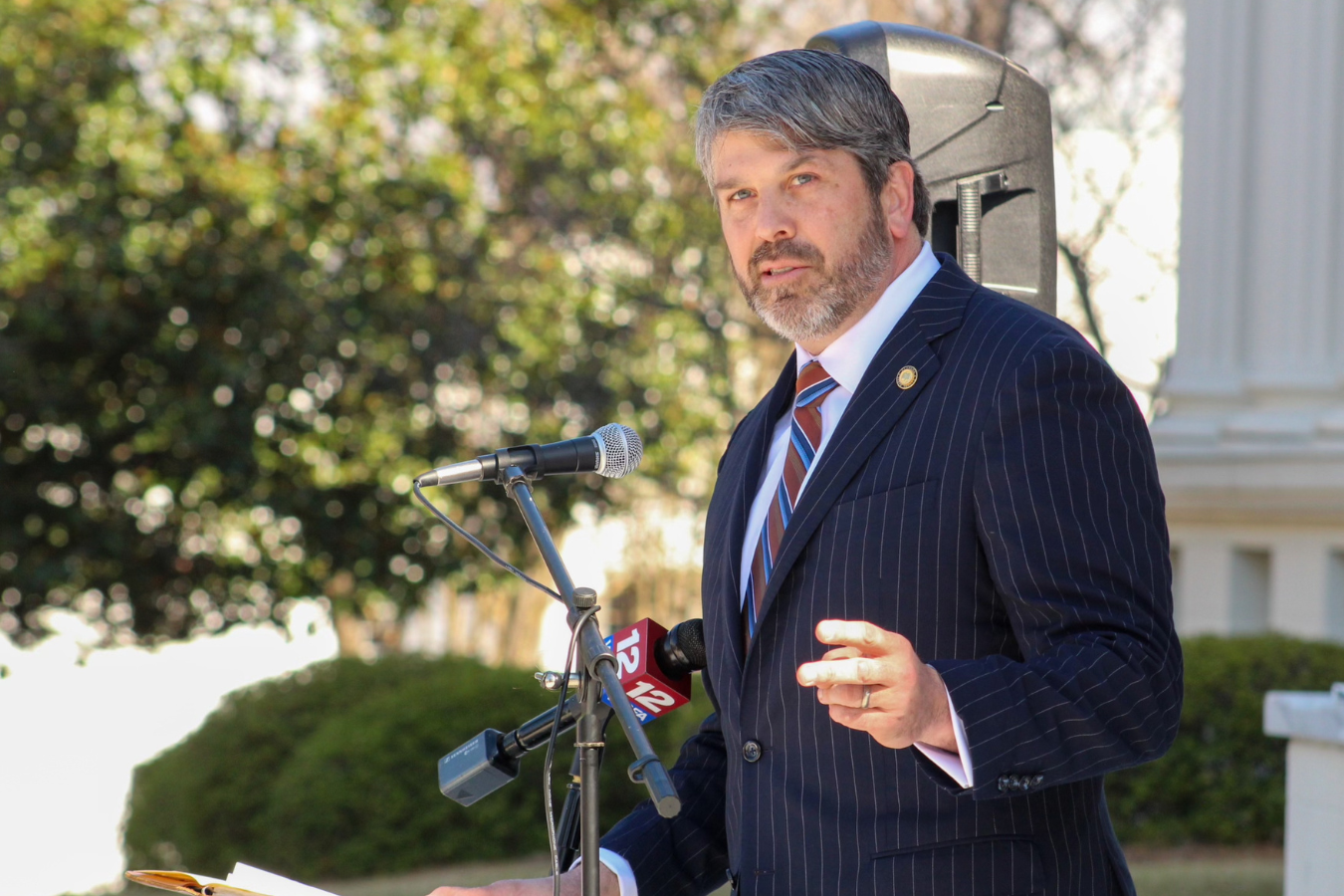
Senate President Pro Tem Garlan Gudger, R-Cullman, said the measure is intended to increase representation and strengthen oversight of utility regulation.
“This secures a voice for the people in each district for decades to come,” Gudger said.
Under the law, electric retail base rates cannot be increased before 2029, though reductions remain permitted.
The legislation also removes certain categories of expenses from rate calculations, including costs associated with lobbying, non-safety-related advertising and certain grant-related activities.
“By removing these costs from the rate structure, this law is designed to lower electric rates for customers,” Gudger said.
The commission will grow from three statewide elected members to seven members, with future seats tied to Alabama’s congressional districts. The shift moves the commission from a fully statewide structure toward a more regionally representative model.
Gudger said the current structure leaves portions of the state without direct representation on the commission.
“Under the current structure, many areas of Alabama do not have direct representation on the commission,” he said.
The law also requires at least one annual public meeting focused on utility rates and authorizes formal proceedings under certain conditions. Those proceedings may be conducted under oath and can include subpoena authority and penalties for perjury.
A newly created secretary of energy position will oversee administrative coordination of the commission but will not have voting authority.
“The secretary of energy will not have a vote,” Gudger said. “Only the elected commissioners will make decisions, with checks in place to ensure accountability.”
The transition to the expanded commission will take place over multiple election cycles. Current commissioners will continue serving through the existing cycle before the new structure is fully implemented.
“By 2030, all commissioners will be elected, ensuring long-term representation for every district,” he said.
The bill passed the Alabama House by a vote of 72-26 following concurrence with Senate changes. Opposition included several Republican lawmakers, including the bill’s original sponsor.
Butler voted against the final version after it was amended in the Senate. Several co-sponsors also opposed the measure on final passage, including Reps. Cindy Myrex, R-Cullman; Susan DuBose, R-Hoover; Mark Gidley, R-Hokes Bluff; Shane Stringer; R-Citronelle; and Ernie Yarbrough, R-Trinity.
Locally, representatives whose districts include portions of Cullman County also voted against the bill, including Heath Allbright, R-Holly Pond; Cindy Myrex, R-Cullman; and Scott Stadthagen, R-Hartselle.
PUBLISHER’S NOTE: The Tribune reached out to Allbright, Myrex and Stadthagen for comment, but none replied by time of print at 5:45 p.m. Monday, April 6.
The split among some House Republicans followed changes made in the Senate, with the final version differing from the original proposal introduced in the House.
Find the full bill here at https://arc-sos.state.al.us/ucp/L2110701.AI1.pdf
What this means for Cullman County ratepayers
While the Power to the People Act applies statewide, several provisions could directly affect residents and businesses in Cullman County.
Rate stability through 2029
The law prohibits increases in electric retail base rates until 2029, which could provide more predictable base utility costs for customers. Rate decreases remain possible.
Changes to rate calculations
Certain expenses, including lobbying, non-safety-related advertising and grant-related costs, are removed from the formula used to determine customer rates.
Expanded representation
The Public Service Commission will grow from three to seven members, with future commissioners tied to congressional districts. This change shifts the commission toward a more regionally representative structure.
Increased oversight and transparency
The law requires annual public meetings and allows for formal proceedings conducted under oath with subpoena authority, adding another layer of accountability to utility regulation.
Gradual implementation
Because of existing election cycles, the additional commission seats will not be filled immediately. The full transition to the new structure will take place over the next several years.