Alabama has legalized medical cannabis. That is not a debate; it is law.
Yet as the program begins to take shape across the state, a new question is emerging at the local level: what happens when a legal treatment option exists, but access to it is quietly limited before a patient ever has the chance to consider it?
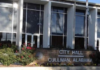
Information shared with The Cullman Tribune indicates that physicians affiliated with Cullman Regional Medical Center may have been instructed not to participate in Alabama’s medical cannabis program, including not providing certifications.
To ensure accuracy, questions were submitted to hospital leadership seeking clarification.
Cullman Regional provided the following statement:
“At this time there are 29 physicians in the state who are certified by the Alabama Board of Medical Examiners to recommend medical cannabis to patients. Patients wanting to explore treatment appropriateness and options for medical cannabis treatment can search the medical cannabis certified physician registry on the Alabama Board of Medical Examiners and Medical Licensure Commission website for help in locating a medical cannabis certified physician.”
The statement does not address whether physicians affiliated with the hospital are permitted to participate in the program. Instead, it directs patients elsewhere, and that distinction matters.
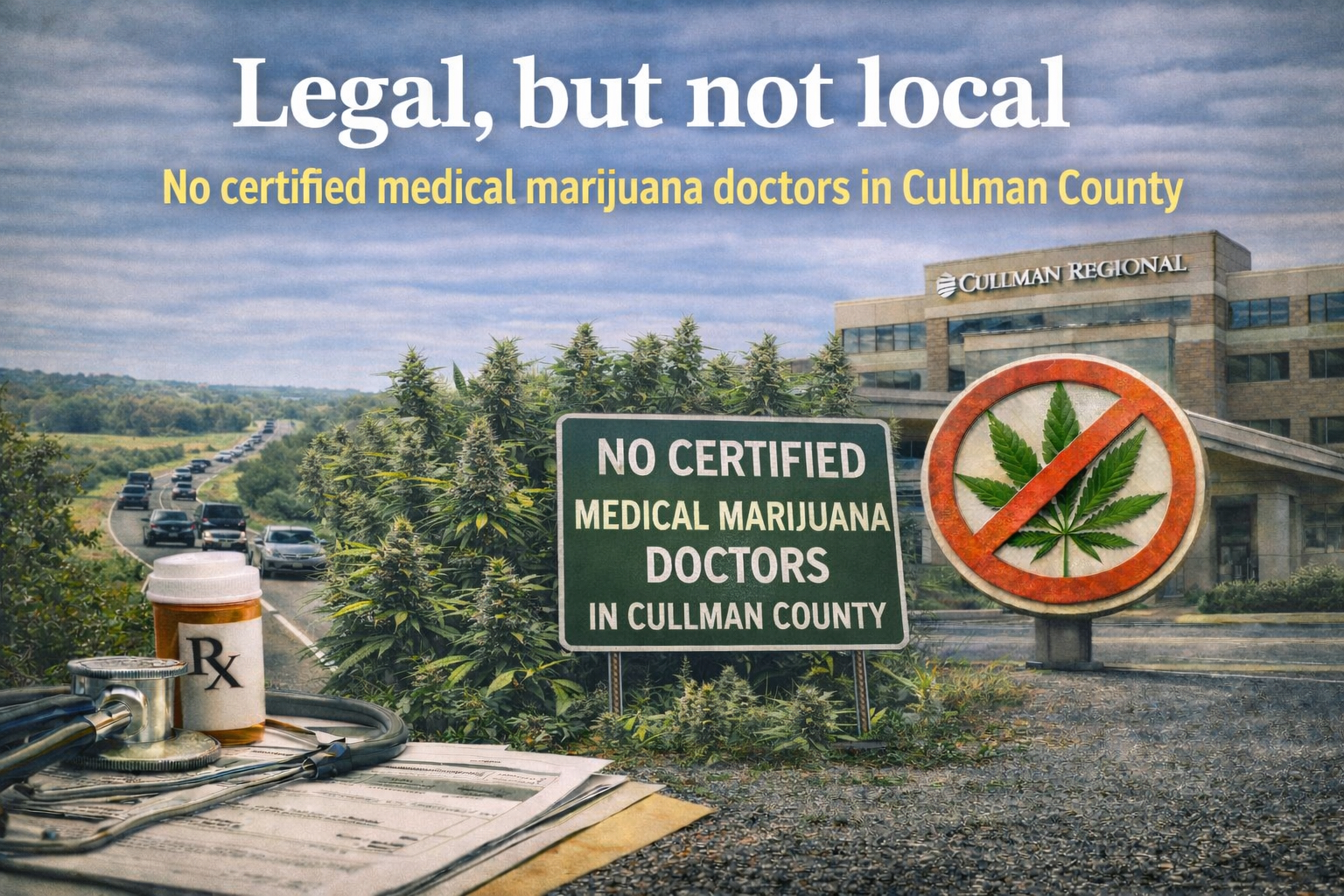
A review of the Alabama Board of Medical Examiners registry shows 29 physicians statewide currently certified to recommend medical cannabis. None are located in Cullman County.
The closest certified physicians are located in Huntsville, Jasper, Haleyville and Birmingham, requiring travel ranging from approximately 30 minutes to more than an hour for most Cullman County residents.
A significant concentration of certified physicians is in the Birmingham metro area, including providers in Birmingham, Vestavia Hills, Hoover, Homewood and Bessemer. Additional physicians are scattered across north Alabama and south Alabama, but access remains regionally limited.
In addition, the state registry referenced by Cullman Regional requires patients to navigate an online license verification system and open individual physician profiles to determine location and availability. For patients seeking care, access is not only limited, but it is also difficult to identify.
At the center of this issue is not marijuana itself – it is access.
Patients in Alabama can legally qualify for medical cannabis under state law, which outlines specific conditions, establishes a regulatory framework and places responsibility in the hands of physicians to determine appropriate care.
If that pathway exists, the question becomes whether institutional policy should stand between a patient and a legal option.
Hospitals and health care systems make decisions every day about treatment standards, risk management and physician practices. That is not unusual.
But those same systems routinely allow, prescribe and promote a wide range of treatments, from powerful prescription medications to emerging therapies, all with varying levels of risk and long-term impact.
So where is the line drawn, and why here?
If a physician can prescribe opioids for pain, antidepressants for mental health or injections for weight loss, all under accepted medical frameworks, what makes medical cannabis different in practice? Is the distinction based on science, policy or something less clearly defined? Those are questions patients deserve answered.
Physicians take an oath to act in the best interest of those they serve, which includes evaluating all available, legal treatment options and guiding patients through informed decisions.
When a system removes one of those options entirely, or declines to engage with it, it raises concerns about whether that decision is being made at the bedside or at the administrative level.
This is not an argument for or against medical cannabis. It is an argument for transparency.
If a hospital system has chosen not to participate in a state-approved medical program, patients deserve to know that clearly, directly and without ambiguity, and they deserve to understand why.
Because in the absence of access within traditional health care settings, the next step is predictable.
Independent clinics will emerge, they will fill the gap and patients will go where they feel their options are being fully considered. That shift does not eliminate the need for oversight or medical guidance; it simply moves it elsewhere.
Cullman is not immune to that reality. If local institutions choose not to engage, others will, and the question will no longer be whether medical cannabis is part of patient care in Cullman, but who is providing it and under what standard.
As Alabama’s medical cannabis program continues to develop, this issue will not remain in the background. Patients are watching, families are asking questions and the expectation is simple: if something is legal, and if it may provide relief, it should at least be part of the conversation.
The law has already made its decision. The question now is whether local institutions will follow it, or continue to stand apart from it.
Certified Medical Cannabis physicians in Alabama
(As listed by the Alabama Board of Medical Examiners, March 2026)
North Alabama / closest to Cullman
- Clinton Scott Williams — Huntsville
- Henry Rene Lemley — Huntsville
- Marilyn Mojana Salada-Ligon — Madison
- Shane Roderic O’Neill — Madison
- Messalina Charisse Jordan — Boaz
- Roger Stanford Buck — Gadsden
- Roy Barco — Muscle Shoals
- Brent Edgeworth Boyett — Hamilton
- Jeffrey Wayne Long — Haleyville
- Woodrow Wilson Herring — Jasper
Birmingham Metro
- Jerry Thomas McKnight — Birmingham
- John Harrison Irons — Vestavia Hills / Bessemer
- Joseph Patrick Lucas — Homewood / Hoover
- Marquisha Denise Moore Jarmon — Hoover
- Nova Law — Birmingham
- Roy Delbert Ary Jr. — Birmingham
- Zenko J Hrynkiw — Birmingham
Central Alabama
- Daniel Edward Banach — Prattville
- Marilyn Joy Elizabeth Hepperle — Prattville
South Alabama
- Alaia Greene — Foley
- Valerie Catherine Staples — Foley
- Luke Burkett Fondren — Mobile / Loxley
- Viengxay Thomas Malavong — Irvington
- Aaron Michael Morgan — Brewton
Location not listed in registry
- Charles Raymond Bradford IV
- Dewey Thacker Jr.
- Madhav Vijen Devani
- Thavatchai Chamnongchareonwong
For more on doctors who are licensed and accepting new patients, visit https://dashboard.albme.gov/Verification/results.aspx.