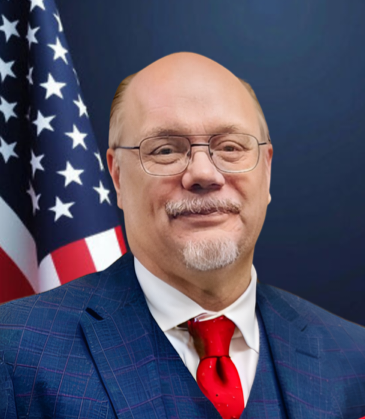
EVA, Ala. – The following is a transcript of an interview from Alabama Public Service Commissioner Jeremy Oden, in which he answers a range of questions he has been asked during his reelection campaign for Alabama Public Service Commission, Place 1.
From Oden’s campaign:
“Disclaimer… I am currently the Commissioner for Alabama Public Service Commission Place 1 and would be considered an expert on the matter. The following is from Commissioner Oden and does not reflect the staff or the other commissioners at the Public Service Commission and is solely the response of Jeremy Oden.
“There have been many articles, calls, posts and so forth concerning the Alabama Public Service Commission. The following is transcript in interview form from Commissioner Oden answering some of the questions he has been presented.”
Question: Talk about why you don’t answer some questions to media? Some say that you don’t disclose enough information. Many times, you just stay quiet.
Oden: Let me first state, the Public Service Commission (PSC) and the Commissioners are under rigorous internal and external ethics, Alabama laws, rules, policies and there’s many times that we cannot respond simply due to these rules and laws. We as Commissioners must be very careful because of these rules and laws that we fall underneath, especially the Ex-Parte rules where we cannot discuss things that may come before us, maybe currently before us, and in some cases even past decisions. The Commission and Commissioners cannot discuss matters that are before the courts, like a lawsuit. We also have the 2-1 rule on open meetings, no two commissioners can be together and discuss issues pertaining to the actions of commission, two commissioners make a quorum. If we do, that violates the open meeting act. We cannot by law disclose anything deemed confidential that is submitted to us. This is the law!
Question: With that in mind, generally go through some of the processes which you use at the PSC. Can you discuss issues such as transparency?
Oden: It has been said that we do not review Alabama Power or other companies we regulate and that we have not reviewed Alabama Power in 40 years. This is probably the biggest false narrative being said in today’s debate. Actually, we review the company on a daily basis, a weekly basis, every month and every year. We are continually looking at them and not just one company, all the companies that we regulate. In particular, the question is on Alabama Power. We have a full-time dedicated staff that continually monitors Alabama Power alongside the Attorney General’s Office. The staff at the PSC is always willing to answer questions, if they legally can answer. I have always answered questions that are ask if I can without breaking any rules.
Question: Can you talk here about transparency?
Oden: It has been said that we do not have public meetings or release information. The Public Service Commission has a monthly-called legal meeting on the first Tuesday of every single month, we do not miss this, it is mandatory. This meeting is online and recorded. It is done live at the time of the meeting. Anyone can go to our page and see the link for the meeting or previous meeting. In this meeting we review all rule changes, laws, policy changes, customer relations, complaints, judicial actions, legal actions, PSC orders, and every PSC director reports what their department did for the reporting month. This is done on all the companies that we regulate!
Question: and Alabama Power?
For Alabama Power we report every single month on Rate Stabilization and Equalization (RSE) and Energy Cost Recovery (ECR). We also cover rate changes, production requests, power agreements and anything that will affect the rate payer or that will affect the operation of the company during the last month or future regulations. We report every single month on Spire Gas as well, both subsidiaries. These meetings also cover telecommunications, railroad safety, pipeline safety, water, wastewater companies or any other regulated entity that has had or may have requested action. Sometimes these may appear in a month’s delay, simply because the data takes that long to process. But these reports are given at every single “open to the public” monthly meeting that we have.
Question: Next let’s talk about how the ratepayers have a voice. It has been stated that the PSC doesn’t hear the people, is there a process for public input?
Oden: In the mid-80s a lawsuit was filed and went through a court action about the advocacy position. At that time the advocacy position was in the PSC. The general ruling by the Supreme Court was that PSC had a conflict to be the advocate and setting policy. The advocacy position was moved or actually done away with inside the PSC. As anyone can see, this would be a conflict of interest. The Attorney General’s office became the permanent intervener/advocate for the rate payer in all decisions at the Public Service Commission. The Attorney General’s office has a seat at the table in all rate discussions, policy changes, or other matters that may affect a regulated entity. As a matter of fact, this position is a permanently filled position within the AG’s office. Any citizen group, environmentalist, or whoever that may be, can contact this office and have their views expressed. Remember this is not a ruling by the Public Service Commission, this is based on a Judicial ruling/order.
Question: You said earlier that people are saying you have not looked at Alabama Power openly or transparently in 40 years. Legislators and some advocacy groups are calling for annual meetings or open meetings, what is your response to them.
Oden: This is another false narrative spread by these so-called people’s advocates and has been for a long time. Groups like Energy Alabama, GASP, SELC. You must understand who these people are. Their goal is to wreak havoc on whatever process is done. They want to do this in public view; you must understand this is how they make their money. Bashing the company and the regulators. And they do this all over the country.
Oden: Sorry I get riled a little by them. As mentioned earlier we do an everyday look and every month we report on Alabama Power. We also have an annual report. Every single December the company must appear before the Public, before us as Commissioners, the PSC staff, the AG’s office and any other intervenors. They are mandated to report on RSE, CNP and other matters that can be brought up in that meeting. Unlike what is being said, these same groups that want a “Public” Rate Case, do intervene and testify, ask questions about the company, and bring up matters about environmental issues, power production, and other related interests at this meeting. These meetings are transcribed and a court reporter is present. These are legal binding meetings. The testimony is recorded and placed in a file. They are usually even placed on our website for the public to have access.
Question: You said outside groups can intervene? Does this include Energy Alabama and Southern Environmental Law Center?
Oden: Energy Alabama, Southern Environmental Law Centers, GASP, River Keepers and other groups have the opportunity and the privilege to ask the company questions concerning the mentioned topics. Yes, they are at these meetings, and they ask questions and intervene. Unlike what they are saying.
They also bring lawsuits against the PSC on a regular basis. This allows them to talk all day in the media, on social media, or on other avenues about what they are suing over. Because of the ethics and laws, we are under, we cannot say anything. Remember they are not under the same ethics and rules. But I will say this, it is a purely false narrative that we do not hold public meetings, or we do not oversee the company. In plain terms we are in their face every day.
Question: Your opposition and others I should say are requesting Open Hearings? What is that?
Oden: I guess what they are asking for is a Formal Rate Case. I don’t think some people asking the question even knows what a Formal Rate Case is. Alabama, due to a lawsuit, again in mid-1980’s, was sued continually by intervening parties. The lawsuits were filed in Montgomery Courts and appealed to the Supreme Court. They were sued for their rates and the request for rates. My understanding is that the Judge in the case got fed up with both sides and made a declarative statement for them to fix the problem. What came out of that was the Rate Stabilization and Equalization formula, RSE is what we call it. That is simple, the regulated entity is given a formula to operate in. The formula has a percentage range with a low number and a high number. They must operate in middle of that formula or range. It has many different factors that go into what rates and accounting measures the company can use, it is very detailed and very strict on the company. Again, simply put, I can get into the weeds but simply they operate in this range, if they go above the range the rate payer receives a give back to their rate payments. If they go below, then the company can request an increase in rates. That is the outcome of that judicial decision in the 1980’s, it is policy and law. I had nothing to do with that implication; I was in high school when that was enacted. In 2014 we did review and had multiple hearings all over the state and we did update the formula to include multiple other factors. It is a very detailed list.
Question: What is a Formal Rate Case that is being called for or wanted?
Oden: What is supposedly being called for is a Formal Rate Case. These are legal proceedings done at the request of the utility asking for either a rate increase or a new production or other matters that may affect the operation of the company. They are a once in time request. The topic is fully described in the request for hearing, and the topic must be maintained throughout the hearing process. You cannot stray into other areas that are not requested or related to the hearing request. The process goes something like this:
- Application/ Request Phase. A Rate hearing is requested by utility, usually termed an application. In this application the utility lists all information concerning the request. If this is a rate request, change in a current rate or production request a hearing is opened in most cases automatically.
- Discovery Phase is opened. This is the testifying, intervention or input phase of the request. Normally this is where intervenors, public comments and experts testify only to said request. Questions are asked on the application only. Company records pertaining to the application can be examined. This process involves lawyers, expert witnesses, investigators, or other professionals deemed necessary for discovery.
- Deliberation Phase. After all evidence, testimony, and public comments are gathered, the regulatory commission enters a deliberation phase. An Administrative Law Judge often oversees the proceedings and may issue a recommended decision based on the record. The commission reviews all submitted information, analyzing the utility’s proposed revenue requirements and the arguments from all sides. Then the commission votes and issues an order.
Question: What is the difference then in what you said about Alabama’s process and this Formal rate process? Why not do it?
Oden: As stated, the Alabama Public Service Commission has the review process always going on. With the AG office present, there is intervention and advocacy continually. If there is an application to be brought for consideration such as rates or production, a separate public hearing can be called. I have set in these separate meetings multiple times over my career. In our process, the company does a similar procedure as above. They present a request to the PSC, the PSC reviews the Request, and the filing is made publicly available. Then we enter questions and discovery over the requested application. The Commission, the Attorney General and the Company requesting are present in all of these conversations. If there is any intervention by concerned advocates or citizens, then they can submit an intervention, usually by a legally filed statement, deposition or testimony. Any individual has the ability to file with the AG’s office as an intervenor. I’d like that emphasized. They can also file a request for standing with the Administrative Law Judge personally, not going through the AG’s office but directly to the ALJ handling the case. It is what is term as having “standing”. The Administrative Law Judge looks at their application for intervention and then rules if they can proceed to the intervention. If they have reasonable cause, then they can be included in the hearing
In a Formal Rate Case, all of this is done as a legal court room procedure. Everyone gets paid. This cost can and does most often run into the millions. The regulated entity, in most cases, gets to recover any cost related to the request. That’s right in these proceedings the expense of the rate case can be recovered by the rate payer. As stated, in Alabama the PSC has dedicated paid employees that handle these requests. The AG’s office has dedicated paid employees of the AG office. The regulated entity usually has dedicated paid employees and attorneys. The regulated entity can incur a lawyer or witness expense from outside of the company, but it is rare. The AG’s office can also incur experts, and the AG pays for that. The PSC usually does not hire outside and uses staff and all internal means, so no additional cost to the taxpayer. Whereas the Formal Rate case can cost millions of dollars and a lot of time.
Just to be honest, the ultimate decision is most likely the same outcome in both scenarios.
In my opinion, and to me this is an important fact, a Formal Rate Case is only heard upon request. You do not examine the company until and only then when the application is submitted. A review only happens when a request is made, that can be 2 years, 3 years and I have seen even 4 years before a review of the company. Whereas the Alabama Public Service Commission can request and discover at any time for information from the company and the Attorney General Advocacy is always allowed to be present.
I’d like to ask, why would an intervenor, legislator or candidate want to call for a Formal Rate Case? Because of the money they will make. There are Rate Case Lawyers, Energy Intervention Experts, and Environmental Intervenors all over the country who get paid millions of dollars to come in and intervene in rate cases. I did say Millions! And of course, the media has a story every day. I would question any candidate, legislator or individual that calls for this type of hearing. They are in it for money, contribution or publicity. In Alabama that cost is not there!
Speaking of money, let me make it clear here, as a commissioner I cannot take any contributions from the entities we regulate. I cannot make any investments in any company that we regulate. It is against the law.
Question: This is the final and possibly the most controversial. What about rates? Everyone says that we have the highest or third highest…
Oden: Well, I guess it is the conversation piece. Understand what I said earlier about not being able to disclose confidential information, being under lawsuits etc. I am going to answer as best as I can and generally. Also understand we must develop this by being reasonable and reliable by law. We must protect the rate payer but do it in a way that allows the company to reasonably and reliably conduct their business. They must be allowed to make a reasonable profit but also, they must be reliable.
First, we have to distinguish what is being said, the cost of energy or the cost of your bill?
Cost of energy is what it costs to produce that power. That is the kilowatt charge and that is what we deal with. The components of that cost are fuel cost, production cost, transmission and a few other smaller rate factors. This is the real cost to the ratepayer; this is the main factor we can influence. This is where we look at production, how the power is made, the cost of transmitting that power, and the fuel factor involved. The fuel factor is directly transferred, meaning the actual fuel cost is automatically included. This is also where the federal rules and regulations come in and there are many.
The bill cost includes the energy charge, but the amount of your bill is based on your usage of that power. It also covers some environmental costs. In some jurisdictions other things are added to your bill like possible sanitation, water, sewer and state taxes. These should be all itemized on your bill. The PSC does not regulate these cost. But usage is the issue. Alabama has one of the highest usages in the country. I think EIA said 30% higher usage above the average.
Energy Cost, we are not the highest. According to a national monitoring agency, Choose Energy. Our cost of kilowatts of production is below the national average and is ranked 30 out of 50, 50 being the highest. Our kilowatt charge ranges from 14.8 to 17.3, currently for the month it is 16.08. The statements “we are the highest” is being used to get attention and make headlines. Some media are careful in saying the word bill verses the word rate, some do not distinguish and that is the rub. Low rates don’t make headlines or get Facebook post. Again, the issue is usage. Our homes in Alabama use electricity where in other states they use other sources of energy like natural gas. We are in a winter peaking state, what that means is we use more energy to heat our homes than to cool them. Also, we have issues with efficiency, we have older heat pumps, and many homes have inadequate insulation etc. Why don’t these advocacies groups do like some do in other states and educate the public on efficiency and usage instead of suing us. I can tell you the answer, they don’t make money off that.
Question: You say in some of your Facebook post and speeches the blame is on the Biden administration or Liberal policies. What does that mean?
Oden: Just that. We are living under the Obama and Biden energy policies. Obama issued a ruling in the EPA that put all these regulations, federal regulations on Coal, Fossil fuels and air quality. That was the ‘war on coal’. I tried to fight it over the years. This is the push and we all have heard the term used” New Green Deal”. As Trump would say this is the biggest scam we have ever seen in our country. It was a way for alternative energy companies to mandate changes to energy production. Why? Because alternative energy is very expensive and did not compare to the cost of fossil fuels like coal. So, they started regulating coal out of business and making capture rules, air quality rules, environmental studies, etc. These rules and policies apply to utilities and states, especially fossil fuel heavy utilities. Alabama Power was one of those utilities. So why? They wanted to make money, and they could not do it with coal and gas being as cheap as it was, so they made coal higher by mandating these standards. Eventually putting so much stress on the utilities that they had to close coal plants and start opening approved green energy production. These are always higher in cost and very less reliable. We now have states that have blackouts and do not have enough energy for the use they have.
We had a reprieve under the first Trump term. In his first term we gave back millions to the rate payers due to the changes in policies and tax structures. Then Biden, man I say this loudly, we were under more energy regulations and federal mandates I think in the history of our country. He pushed the new green deal in all of his policies and regulations. Fines were issued, mandates were given, all on energy. Across the country utilities and regulators had to make adjustments. I don’t think there was single utility that did not face some sort of adjustment. Even those that use so called green energy. I really think he was trying to destroy our energy production in our country to be fully reliable on other countries, like the northeastern United States is to Canada today.
Question: Why haven’t we seen a change since Trump is in office?
Oden: You have. The commission placed a moratorium on rates increases this last November. This will be in place for two years, until 2028. I have a one-page explanation on it. I can get that to you. But simply the rate cannot increase, there is nothing in there about decreases. The company is assuming a lot of costs, and it is not being paid for by the ratepayer. This is more of a stability issue. Keeping the rates stable until some of these Trump revisions can take place. We also can then have the time to adjust and if possible lower rates or give back to the rate payer. If I am correct the administration and EPA just did away with the EPA standards rule that was passed by Obama that started this whole mess. So, we are going to get some relief. It just takes time to implement. And by the way we are not going to carry over cost or additions etc. to 2028. That is purely false. Our process will resume as normal in 2028.
Question: Rates will be lowered?
Oden: We will be looking at rates, all the measures and implications presented so we can lower rates. I know for a fact that we will be getting some returns to benefit the ratepayer. This may apply to cost to keep stability, or it may even be in a full rebate or return, but none the less, the benefit will be to the rate payer.
Question: That will be good…Ok, this has been a long one. I think that is all for now, anything else you may want to briefly say or wrap up.?
Oden: I think it is important and I appreciate you allowing me to answer some of these questions. Look I try to do the best I can. I realize I am not perfect. But I have always tried to look at everything presented to me and make the best decision I can based on that.
Again, thank you for your time. You have my contact details and remember you can contact me and ask for clarification or anything else.
Jeremy Oden
Office: 334-242-5203
Email: jeremy.oden@psc.alabama.gov
Tribune info
Key dates
- Primary Election: Tuesday, May 19, 2026
- Primary Runoff Election: Tuesday, June 16, 2026
- General Election: Tuesday, Nov. 3, 2026
Publisher’s note: Any candidate on the ballot is welcome to submit a Q&A transcript. We will publish one per candidate to ensure equal coverage.