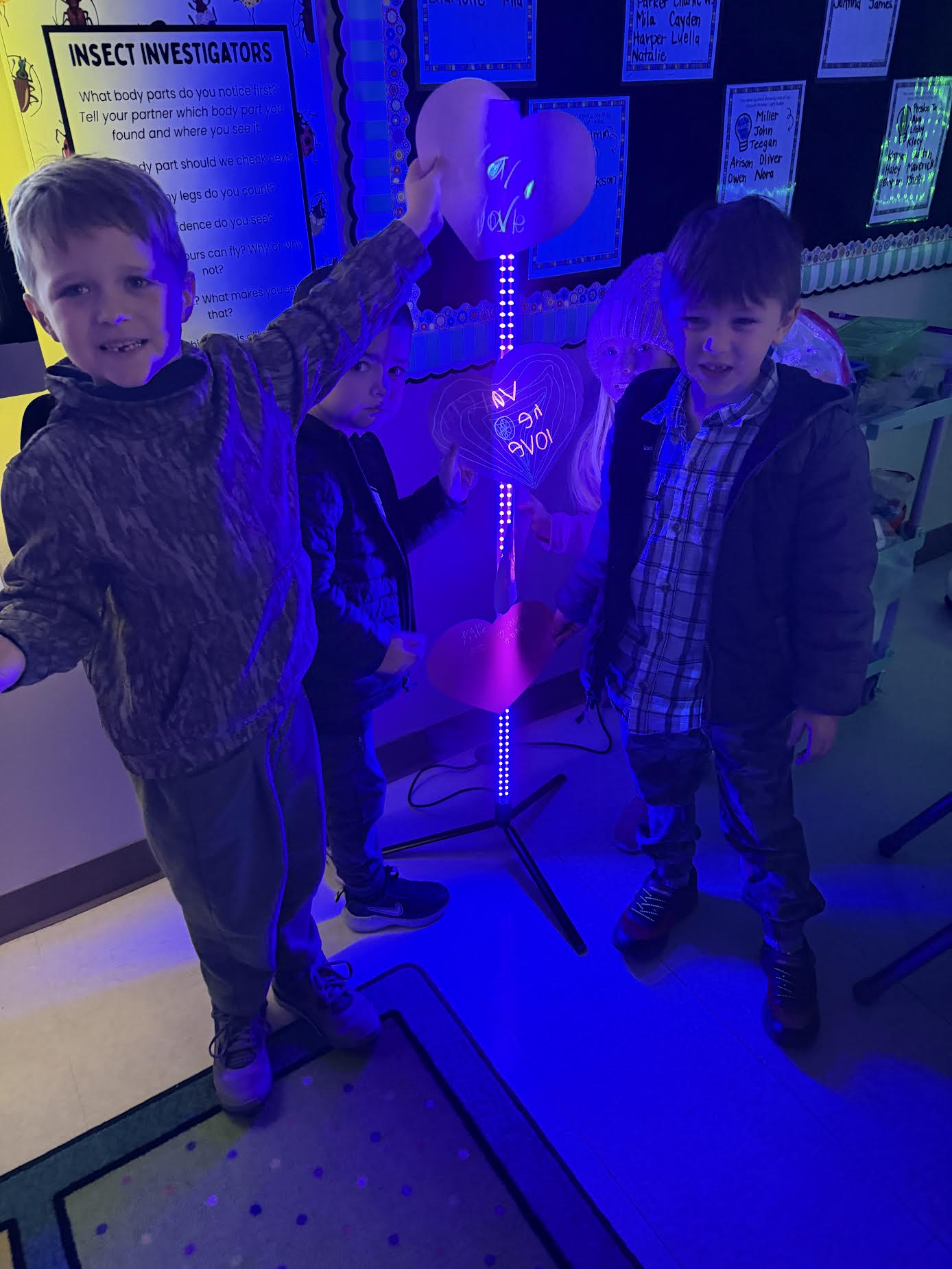
CULLMAN, Ala. – The lesson plan was glowing, literally, at Cullman City Primary School recently as students had a chance to learn about how different materials can glow in the dark as part of an innovative and fun Science, Technology, Engineering and Math (STEM) lesson.
Students created cards for Valentine’s Day using a variety of colors and mediums including highlighters, colored inks, and invisible ink for a hands-on investigation of phosphorescence. Students from across kindergarten through second grade participated, and the activity was paid for via a grant from the Operation Roundup program.
“Students then tested their designs under different lighting conditions to compare glow effects and identify which materials displayed the strongest phosphorescent properties,” CCPS STEM teacher Anna Anderson explained. “Throughout the lesson, students relied on observable characteristics and visual evidence to make deductions, encouraging them to think like scientists by forming explanations based on what they could directly see and test. The experience also introduced students to bioluminescence, expanding the discussion to how living organisms can produce light.”
On a practical level, the lesson was designed to strengthen foundational scientific reasoning skills while supporting key K–2 standards related to light, properties of materials and scientific inquiry. Students practiced making predictions, observing outcomes and using evidence-based reasoning to explain why certain colors and substances glowed more intensely than others.
“Emphasis was placed on analyzing observable traits rather than guessing, helping students understand how scientists draw conclusions from patterns and testable results,” Anderson explained. “By blending creativity with experimentation, the activity reinforced cause-and-effect relationships and encouraged students to articulate their thinking, an important component of early science and STEM instruction.”
Anderson said students were incredibly excited by the project, getting to see their work come to life in so many bright and glowing colors. And though the original focus was on creating cards and art, she explained when the experiment got a little off-canvas, it was an impromptu opportunity for a few more lessons on the topic of bioluminescence.
“One of the most memorable moments occurred when students discovered that some pieces of their own clothing unexpectedly glowed under the light source. This observation sparked genuine curiosity, as students eagerly examined fabrics, colors and materials to determine why certain items showed phosphorescence,” she said. “The element of surprise transformed the investigation into a highly engaging experience, prompting students to ask questions, compare findings and enthusiastically share their discoveries. The glow effects, combined with the Valentine theme, created an atmosphere of wonder that made the scientific concepts especially meaningful.”