It has become very common for electronics and media to be incorporated into children’s everyday routines. Highly stimulating shows, for example, are used as enrichment. They are often categorized as “children’s educational entertainment,” though recent controversy proves otherwise.
Excessive screen time is known to have negative effects on adults, let alone children. Occasional screen time isn’t necessarily bad, but as with everything, there needs to be balance. It is not a babysitter and shouldn’t be treated as such. The content should still be monitored, as well as the little ones consuming it.
There have been increasing concerns with children’s cognitive development when it comes to highly stimulating content. “Cocomelon,” for example, uses maximum saturation colors for its animation. Extreme saturation colors are very intense and overwhelming. It is hard for children to draw their attention away from it if they are exposed for long periods of time. This is why you see children having meltdowns when devices are taken away.
Extreme saturation is also used in casinos – more specifically, the slot machines.
“Cocomelon” is highly repetitive and has various scenes with very quick frame changes. They cut so quickly it’s very similar to scrolling through TikTok. These rapid, short bursts of content make your brain release dopamine and it becomes addicting. So how educational can this content be if they have to create it in a way that makes its audience experience withdrawal in its absence?
Here are some better options:
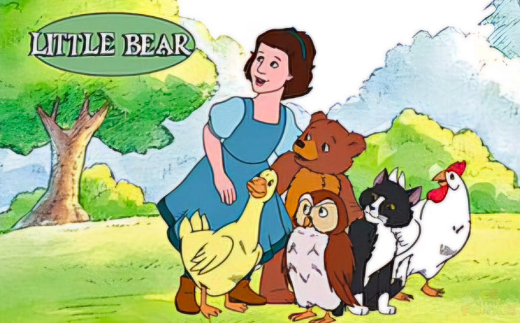
“Little Bear”
“Little Bear” is set in the wilderness and follows the main character Little Bear. His parents, whom he lives with in a cottage in the woods, are Mother and Father Bear. Every episode is roughly 22 minutes long and features Little Bear embarking on exciting adventures. He is accompanied by his friends Duck, Hen, Cat, Owl and Emily.
“Franklin”
In “Franklin,” the story follows a young turtle who lives in a village called Woodland. The show follows him as he goes to school and learns. He is accompanied by his friends and parents, Mr. and Mrs. Turtle.
The series was aimed for preschool education. The television stories and books often start with a sentence defining the direction of the episode. Whether it be tying shoes, making a new friend or whatever adventure is in store.
“Arthur”
Arthur Read is an Aardvark who lives in Elwood City with his sisters, D.W. and Kate, parents, David and Jane, as well as their dog, Pal. The show depicts Arthur’s family and school life as well as his growing friendships. It displays complex emotions like stress, but shows the importance of maintaining positive attitudes.