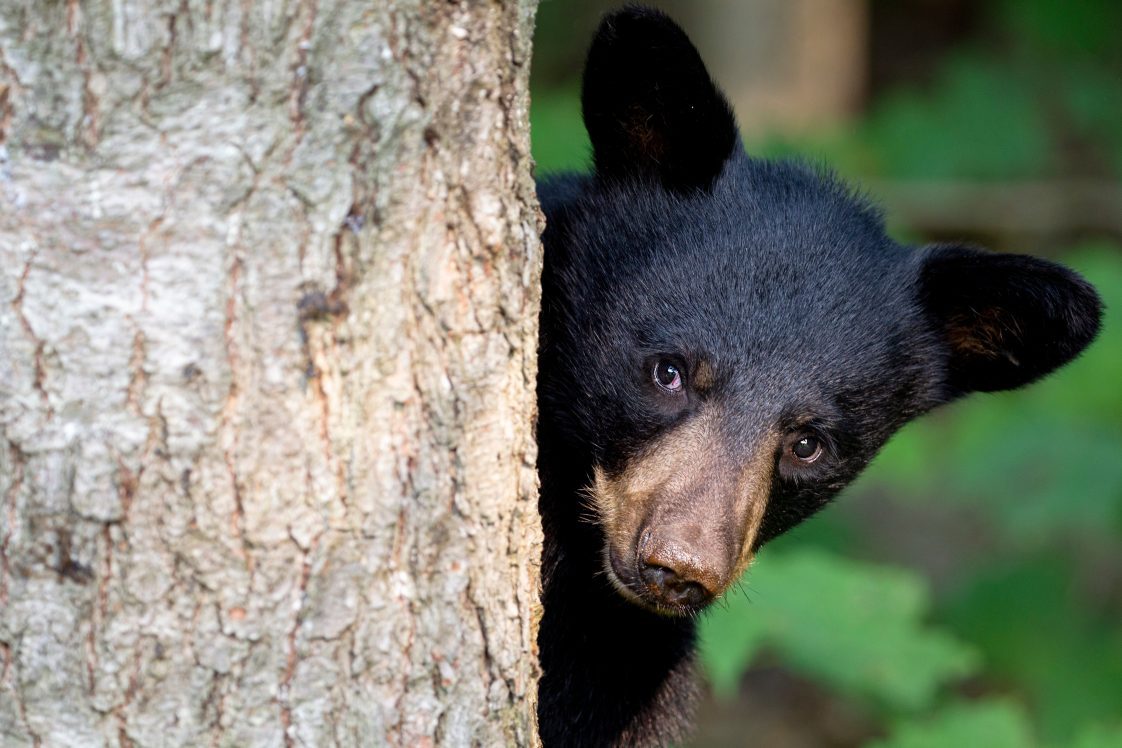
AUBURN UNIVERSITY, Ala. – The black bear is one of the most interesting creatures in the United States. In fact, thousands of people travel to areas such as the Great Smoky Mountains every year specifically to see them. Black bears have historically been present in almost every region of the U.S. and Canada, including Alabama. Today, however, populations are more concentrated in certain areas, such as California and the Appalachian Mountains.
In Alabama, once-declining populations have rebounded in recent years, with black bears recolonizing from neighboring Georgia and Tennessee. Wesley Anderson, an Alabama Cooperative Extension System wildlife specialist, said simply having bears in the area does not mean that there will be negative impacts. However, as their populations continue to grow, Alabama residents should be aware of their presence and know how to coexist.
Getting to know the American Black Bear
According to the Alabama Department of Conservation and Natural Resources, black bears are the smallest bears in North America, with males and females averaging 250 and 150 pounds, respectively. In the U.S., bears in southern parts of the country are typically smaller than black bears in the north.
The group and sex names of black bears may come as a surprise to some. Groups of bears are known as a sleuth or sloth. Like their fellow mammal, the pig, male bears are known as boars and females are known as sows. However, juvenile bears don’t follow the swine trend and are known as cubs.
Black bears are most often found in dense, forested areas and wetlands. In Alabama, Anderson said black bear populations are in two primary parts of the state.
“People can find black bears in northeast Alabama, primarily along Lookout Mountain and Little River Canyon,” Anderson said. “In southwest Alabama, bears are primarily in Mobile and Washington counties. Whereas the southwest population remains small, the northeast population continues to grow.”
Black bear diets largely consist of vegetation, up to 85%. In Alabama, Anderson said a study in 2016 showed that black gum fruit, grasses and acorns were among their most commonly consumed fall foods. However, they will also feed on carrion, fish, insects and vertebrates.
“Black bears are omnivores and opportunists, meaning that they eat a wide variety of plants and animals,” Anderson said. “Because they occur across a broad geographic range, their diet will vary based on both location and proximity to people.”
Human-black bear interactions
Because of their low population numbers, Anderson said black bears are currently not a big concern to humans in most parts of Alabama. However, it is important to know what to do when encountering a bear. Remember, it is illegal to shoot, harm or harass black bears in Alabama.
Black bears are rarely aggressive and often as scared of humans as humans are of them. However, they are still wild animals and could attack if they feel threatened, especially if it is a mother defending her cubs. When encountering a bear, do not run away. Calmly and slowly back away. Also, it is never good to surprise a bear. People should make their presence known by making noise, waving their hands above their head and using an assertive voice.
In areas where bear populations are established, it is also important to be cautious of items like food and trash that may attract bears. Clean grills after use and keep pet food inside or only outside during the day. For anything that must be stored outside, use bear-resistant containers.
More information
For more information, visit aces.edu/go/AlabamasBlackBear. There, people can download a poster and coloring sheet that contain more fun facts about the black bear.